
Welcome to Scaled Agile Framework® 6.0!
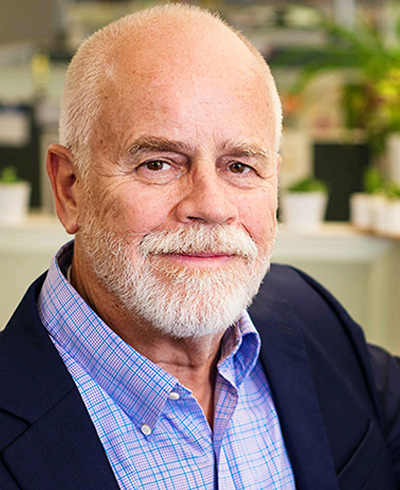
Hi, I’m Dean Leffingwell, Creator of SAFe® and Chief Methodologist at Scaled Agile, Inc. On behalf of the entire Scaled Agile team and the SAFe Contributors, I am pleased to introduce you to the Scaled Agile Framework® (SAFe) 6.0, released in March 2023.
SAFe 6.0 is a knowledge base of proven, integrated principles, practices, and competencies for achieving business agility using Lean, Agile, and DevOps. It is built around the Seven Core Competencies of Business Agility that are critical to achieving and sustaining a competitive advantage in an increasingly digital age:

Lean-Agile Leadership – Advancing and applying Lean-Agile leadership skills that drive and sustain organizational change by empowering individuals and teams to reach their highest potential

Team and Technical Agility – Creating high-performing Agile teams as well as sound technical practices including Built-in Quality, implementing and measuring flow, and more

Agile Product Delivery – Building high-performing teams-of-teams that use design thinking and customer-centricity to provide a continuous flow of valuable products using DevOps, the Continuous Delivery Pipeline, and Release on Demand

Enterprise Solution Delivery – Building and sustaining the world’s largest software applications, networks, and cyber-physical solutions

Lean Portfolio Management – Executing portfolio vision and strategy formulation, chartering portfolios, creating the Vision, Lean budgets and Guardrails, as well as portfolio prioritization, and roadmapping

Organizational Agility – Aligning strategy and execution by applying Lean and systems thinking approaches to strategy and investment funding, Agile portfolio operations, and governance

Continuous Learning Culture – Continually increasing knowledge, competence, and performance by becoming a learning organization committed to relentless improvement and innovation
Mastery of these seven core competencies enables enterprises to achieve the agility needed to successfully respond to volatile market conditions, changing customer needs, and emerging technologies. Each competency is summarized in a knowledge base article and reflected in related guidance throughout the SAFe website. These core competencies have been evolved and enhanced in this new version.
Version 6.0 is a substantial leap from 5.1 that includes increased emphasis and guidance for achieving a more continuous—and ever-faster—flow of value delivery to customers. The major themes for this release are:
1. Strengthening the foundation for Business Agility
2. Empowering teams and clarifying responsibilities
3. Accelerating value flow
4. Enhancing business Agility with SAFe across the business
5. Building the future with AI, Big Data, and Cloud
6. Delivering better outcomes with measure and grow and OKRs
You can learn more about the significant changes in the “What’s New in SAFe 6.0” overview.
Our Mission
Since the earliest days at Scaled Agile, our core belief has been simple: Better software and systems make the world a better place. Version 6.0 represents an ambitious expansion of that mission: to enable business agility via the continuous flow of customer value required for enterprises to compete and thrive in the digital age. This requires every part of the organization involved in delivering and supporting technology-based solutions—development, operations, manufacturing, legal, marketing, finance, compliance, sales, and others —to embrace the principles and practices of Lean and Agile. We help enterprises achieve business agility through the research and thought leadership reflected in the SAFe website and our world-class courseware, training, community resources, and certification programs.
As you can see from the numerous Customer Stories, many large and small enterprises are getting outstanding business benefits from applying SAFe. Benefits typically include:
- 20 – 50% increase in productivity
- 25 – 75% improvements in quality
- 30 – 75% faster time-to-market
- 10 – 50% increase in employee engagement and job satisfaction
As you can imagine, with these results, SAFe adoption is growing rapidly worldwide. Seventy percent of Fortune 100 companies and a growing number of the Global 2000 have certified SAFe professionals and consultants on-site, and over 1,000,000 practitioners have been trained to date.
Support for SAFe
The Scaled Agile Framework is supported by the SAFe® Studio platform and Scaled Agile’s dedicated Customer Success Team. To ensure success for teams and the enterprise, an extensive network of 500+ Scaled Agile Partners provide strategic advisory services, implementation support, training, coaching, and technology platforms for SAFe collaboration, visibility, and flow in almost every region of the world.
While every business situation is unique, we have found that the SAFe Implementation Roadmap is still the most tested and proven method for guiding the organizational changes needed to deliver results.
For more on SAFe, please browse the website and subscribe to SAFe news, where you will be the first to get notification of new developments. Also, check out the Resources menu, where you will find our latest posters and videos:
- The SAFe 6.0 Big Picture graphic
- SAFe Principles
- SAFe Implementation Roadmap
- SAFe Overview with SAFe’s seven core competencies
- SAFe 6.0 videos and downloadable PowerPoint presentations.
Be sure and check out our corporate site at scaledagile.com where you will find details about the latest SAFe courses, the Scaled Agile Partner Directory, over 100 SAFe customer stories, news about SAFe events, and much more.
At any given time, there are well over a thousand SAFe classes being offered worldwide. When you’re ready, attend a SAFe course and get certified. You never know; we might see you at one of them.
Our commitment is to continuously evolve SAFe to provide value to the industry—better agility, better systems, better business outcomes, better organizations, and better daily lives for the people who build the world’s most important new technologies and solutions. But only you can tell us whether or not we have accomplished that.
Stay SAFe!
—Dean, Andy, and the Scaled Agile Team
A Brief History of SAFe
With six major updates since its initial release in 2011, SAFe has grown with the marketplace as we uncover new and better ways of developing software and systems. Although new versions of the SAFe Big Picture are released only occasionally, the Framework knowledge base is continuously updated with new and improved guidance between releases.
Below is a quick look at the version history of the Framework.
