
The big question of our time is not can it be built? But should it be built? This places us in an unusual historical moment: our future prosperity depends on the quality of our collective imaginations.
—Eric Ries, The Lean Startup [1]
Epic Owners
The Epic Owner is responsible for coordinating epics through the portfolio Kanban system.
Epic Owners (EO) work collaboratively with stakeholders to define the Epic, the Lean business case, and the definition of a Minimum Viable Product (MVP) and are responsible for shepherding the epic through the portfolio Kanban system. If Lean Portfolio Management (LPM) approves the epic, the EO coordinates the introduction of the epic into implementation with the Agile Release Trains.
Details
Before being committed to implementation, epics require analysis, a Lean business case, and a definition of the MVP. Epic Owners take responsibility for the crucial collaborations needed to guide epics through this process. Enterprise Architects typically act as Epic Owners for Enabler epics. Epics often require the collaboration of multiple Agile Release Trains (ARTs) to implement them. The Epic Owner coordinates this work.
Collaboration is a Key Aspect of the Role
Epic Owners can come from anywhere in the enterprise. But they can only be effective by collaborating closely with other stakeholders. They help fill in the gaps in planning and execution that otherwise occur. Figure 1 highlights the people who typically fill the Epic Owner role and the key collaborations they foster.
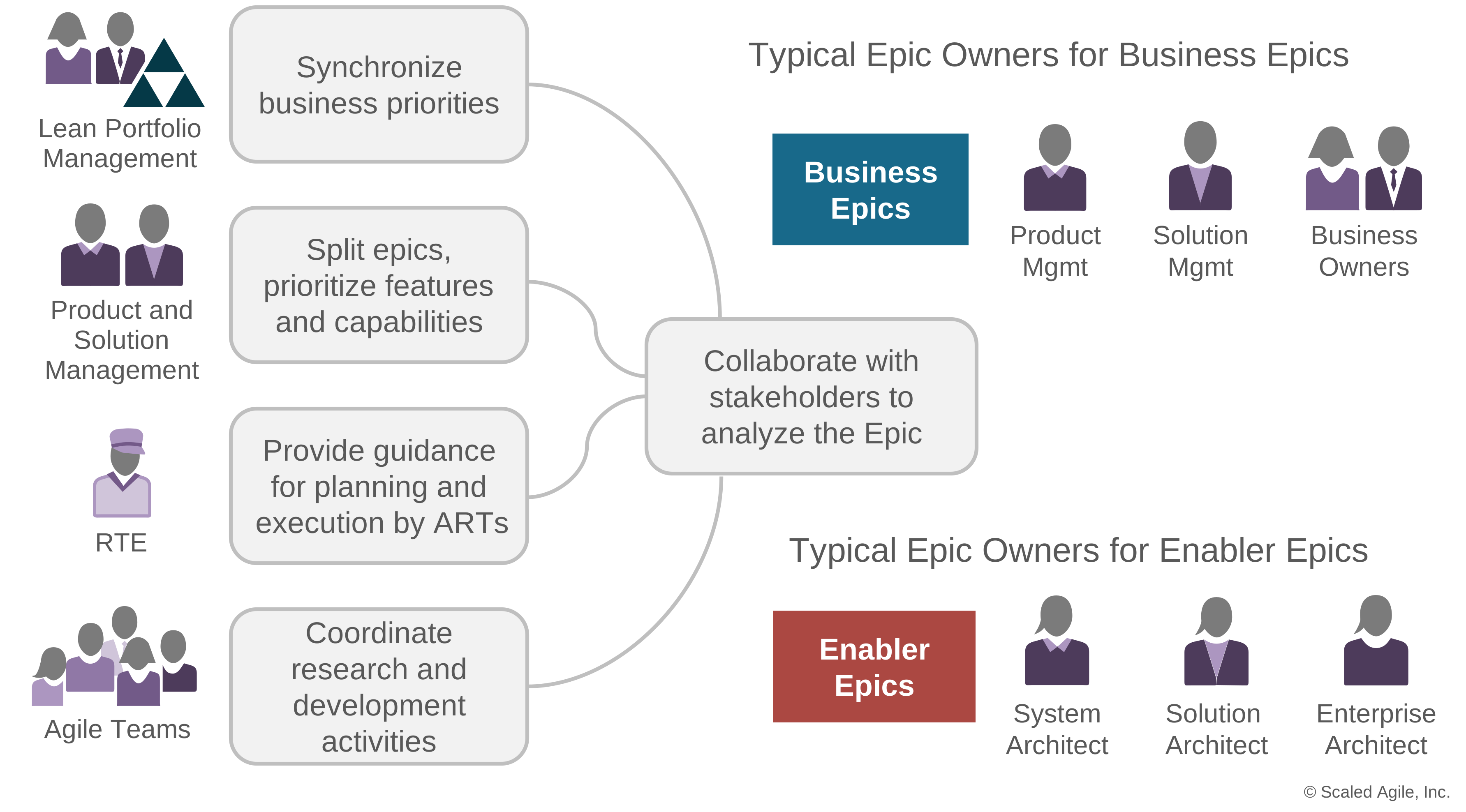
Typically, an Epic Owner works on epics within their area of expertise and current business mission. Epic Owners are responsible for formulating and elaborating the epic and analyzing its cost and impact by collaborating closely with these groups.
Responsibilities
Figure 2 illustrates the Epic Owner’s four primary areas of responsibility.
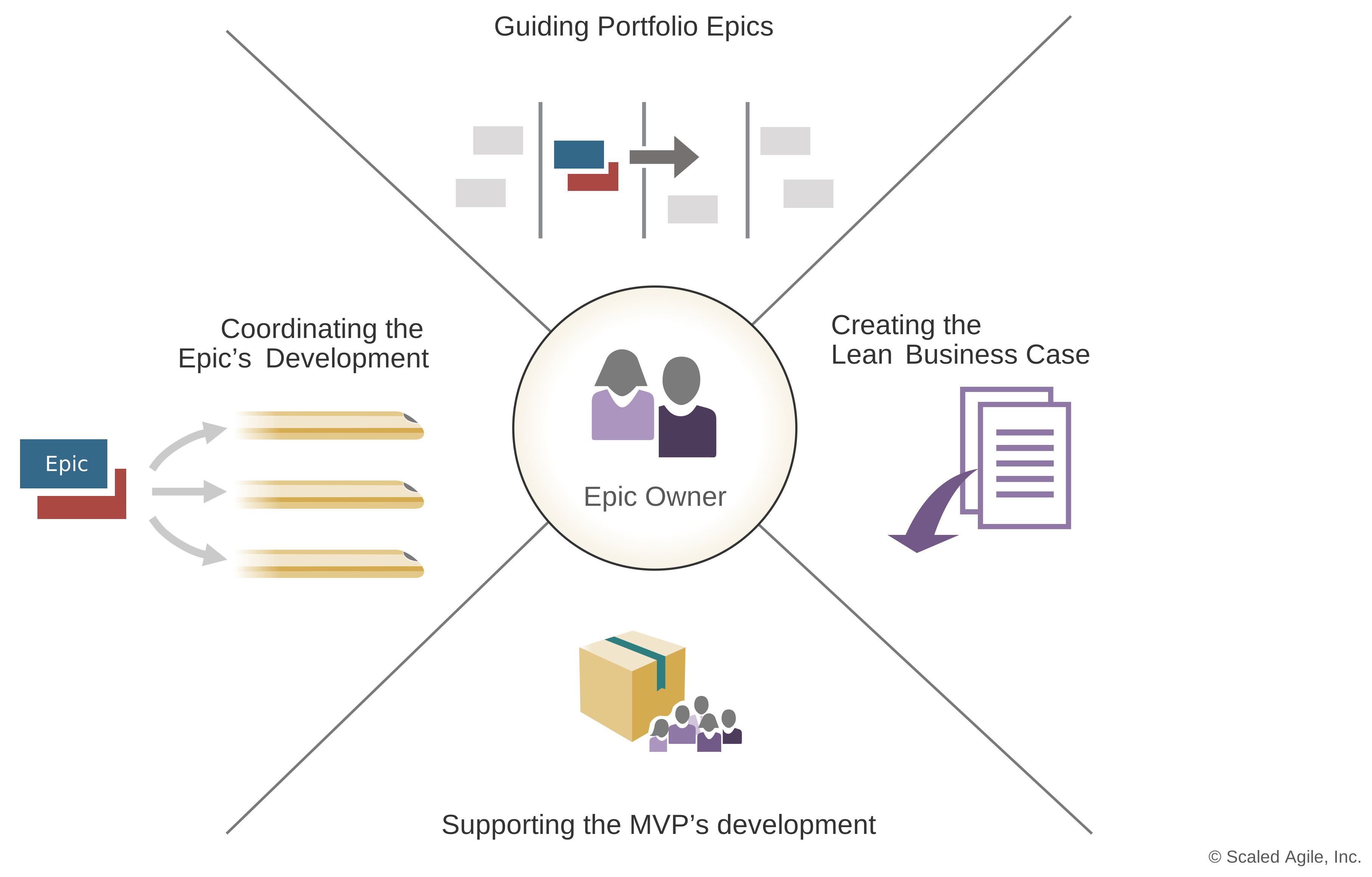
The following sections describe each of these responsibilities.
Guiding Portfolio Epics
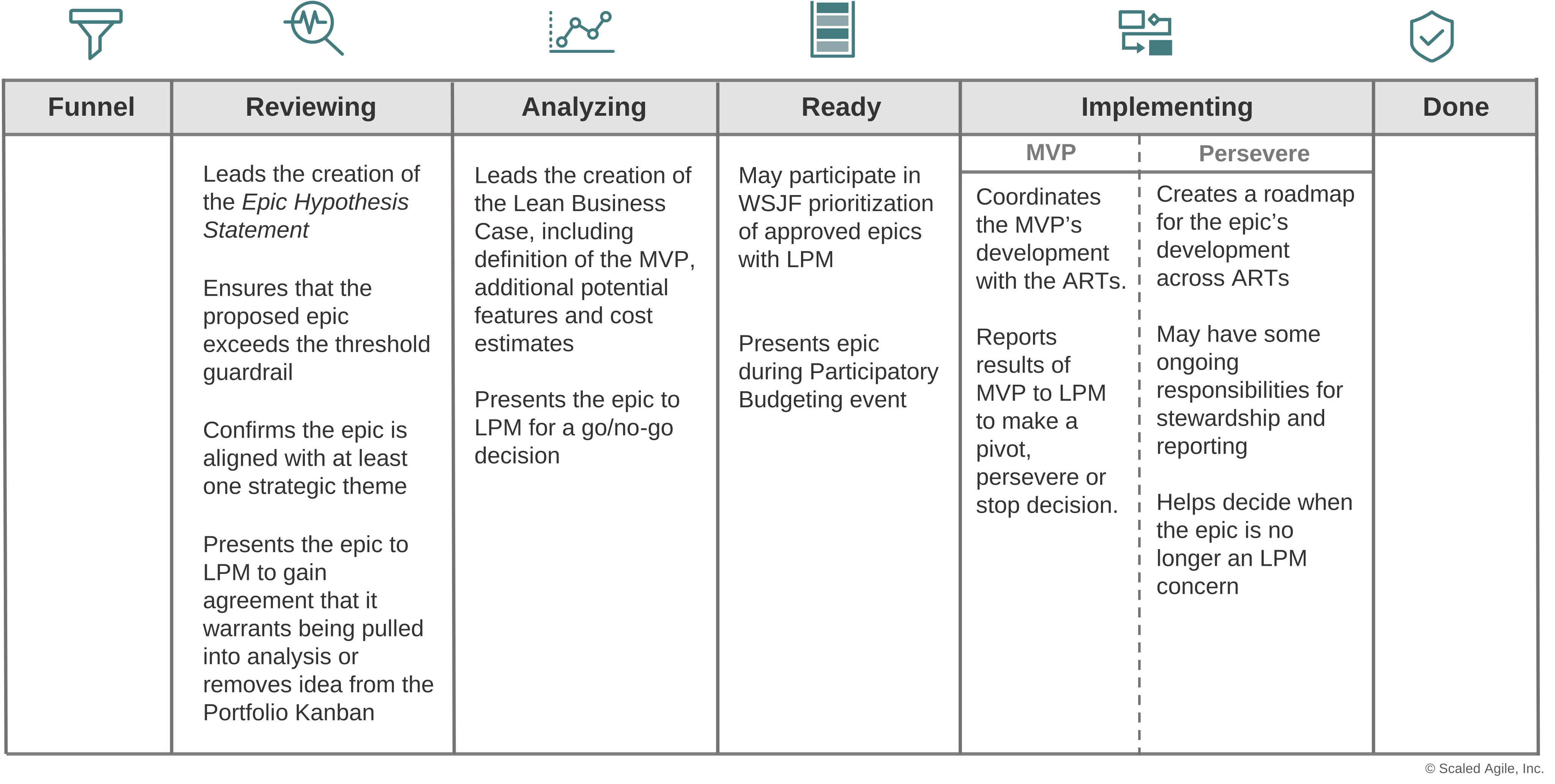
The Epic Owner guides epics through the Portfolio Kanban system from identification through implementation, collaborating closely with stakeholders and subject matter experts.
Figure 3 illustrates the role of the Epic Owner in each state of the portfolio Kanban system.
Creating the Lean Business Case
Epics that make it to the analyzing state require more rigorous exploration, a Lean business case, and further investment to evaluate their cost and benefits. This analysis typically requires active collaboration among the following roles:
- Business Owners
- System Architects and Solution Architects
- Product and Solution Management
- Agile Teams
Epic Owners, stakeholders, and internal teams collaborate to size the epic and provide input for economic prioritization based on Weighted Shortest Job First (WSJF), the Lean business case, and other relevant information.
Epic Owners take responsibility for the critical collaborations needed to analyze the epic and create the Lean business case. At the same time, Enterprise Architects typically coordinate the enabler epics that support the technical considerations for business epics.
The Epic Owner is primarily responsible for creating and presenting the Lean business case to Lean Portfolio Management (LPM) for a ‘go’ or ‘no-go’ decision. Approval, however, is not guaranteed, as enterprises typically have more ideas and opportunities than they can execute. Accordingly, when presenting the epic, the Epic Owner should focus on the merits of the business case, secure in the knowledge that the collaborative discussions that form the foundation of LPM will ensure they are making optimal investment choices.
Supporting the MVP’s Development
After the epic is approved, the Epic Owner works with ARTs to initiate the MVP’s development activities, following the SAFe Lean Startup Strategy to evaluate the business outcome hypothesis.
This strategy recommends a highly iterative build-measure-learn cycle for product innovation and strategic investments. It provides the economic and strategic advantages of a Lean startup (see Epic) by managing investment and risk incrementally while leveraging the flow and visibility benefits of SAFe.
Developing the MVP and gathering the data necessary to prove or disprove the epic hypothesis is a highly iterative process, continuing until positive results are obtained, or the teams consume the investment allocated for the MVP. The output of a proven hypothesis is an MVP suitable for getting customer feedback that would warrant further investment by the value stream. If disproven, investment in the epic stops.
Coordinating the Epic’s Development
If the epic hypothesis is proven, Epic Owners often play a significant role in coordinating its implementation across value streams where they:
- Collaborate with Product and Solution Management and System and Solution Architects to decompose the epic into features and capabilities and help prioritize these backlog items in their respective ART and Solution Train Backlogs
- Participate in PI Planning, System Demo, and Solution Demo whenever there is critical activity related to the epic
- Work with Agile Teams that perform research spikes, create proofs of concept, mock-ups, etc.
- Coordinate and synchronize epic-related activities with sales, marketing, and other business units
- Facilitate the implementation of the epic through the continuous delivery pipeline and release on demand
- Understand and report on the epic’s progress to key stakeholders and LPM
The role of the Epic Owner typically continues until the ARTs have sufficiently integrated the epic into their roadmaps and the Epic Owner’s expertise or coordination is no longer required.
Learn More
[1] Ries, Eric. The Lean Startup: How Today’s Entrepreneurs Use Continuous Innovation to Create Radically Successful Businesses. Crown Business, 2017.
Leffingwell, Dean. Agile Software Requirements: Lean Requirements Practices for Teams, Programs, and the Enterprise. Addison-Wesley Professional, 2010.
Last update: 30 June 2023