
People at work are thirsting for context, yearning to know that what they do contributes to a larger whole.
—Daniel Pink, Drive [1]
Portfolio Vision
The Portfolio Vision describes the future state of a portfolio’s value streams and solutions.
Details
The portfolio vision sets a longer-term context for near-term decisions in a practical and inspirational way, clearly articulating why the future state of enhanced products and services is worth achieving. Understanding the longer-term view helps Agile Teams, Agile Release Trains, and Solution Trains make more informed choices about the development of functionality in both the short and long run.
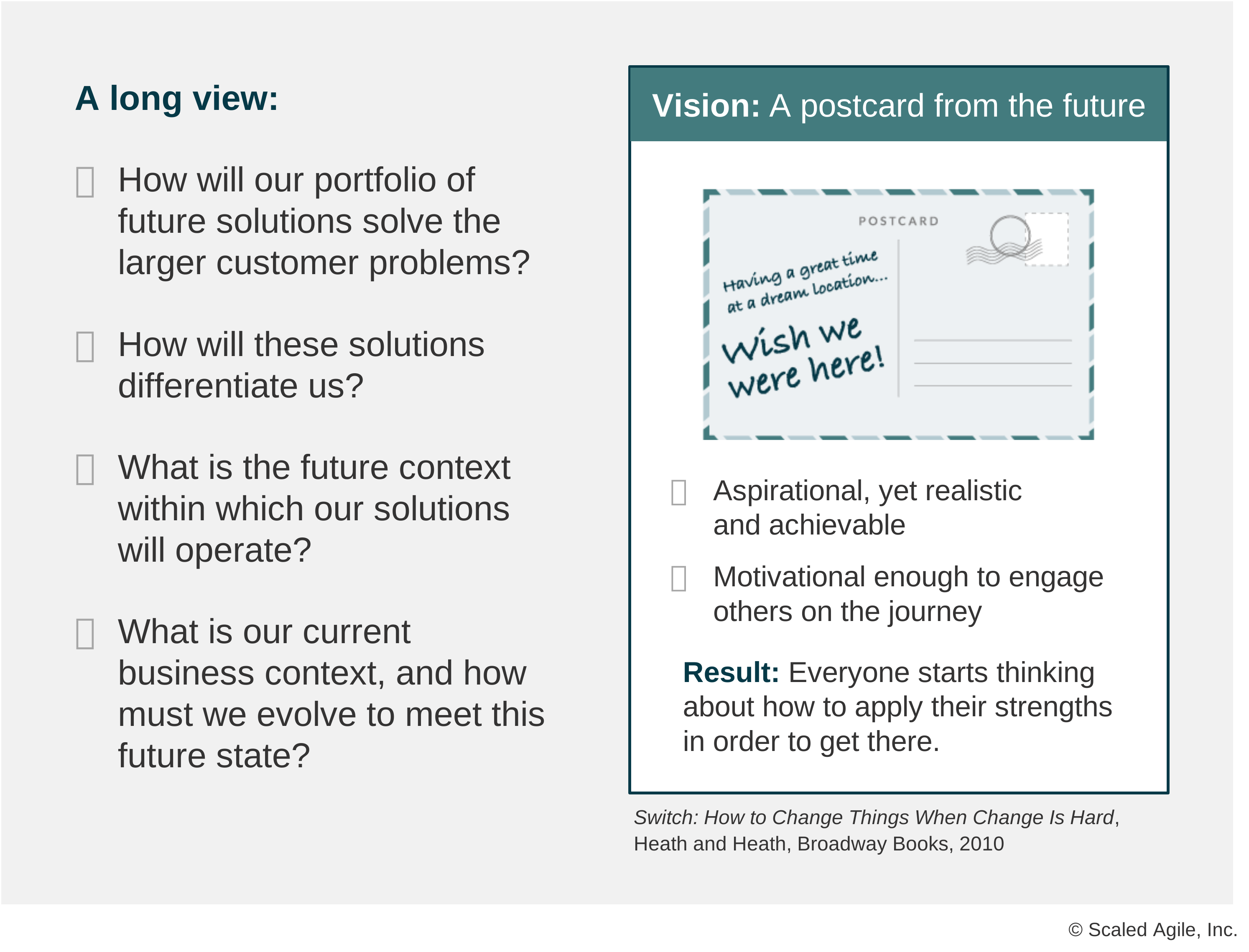
Lean Portfolio Management (LPM) is primarily responsible for ensuring the strategic direction of the portfolio maps to the strategic themes and enterprise strategy. This requires a clear understanding and communication of the portfolio vision. In the book Switch [2], authors Dan and Chip Heath liken this future vision to a ‘destination postcard,’ as Figure 1 illustrates.
The portfolio vision should have the following characteristics:
- Aspirational, yet realistic and achievable – It must be compelling and somewhat futuristic, yet practical enough to be feasible over some meaningful timeframe
- Motivational to engage others on the journey – The vision must align with the Strategic Themes, as well as with the individual team’s purpose
Business Owners or senior leaders typically present this longer-term view and business context during the PI Planning event. These leaders can inspire and align the teams, increasing engagement and fostering creativity to achieve the best results.
Introducing the SAFe Portfolio Canvas
The SAFe portfolio canvas (Figure 2) is based on the Business Model Canvas (see this topic in the Enterprise article) developed by Alexander Osterwalder [3]. The portfolio canvas defines the Development Value Streams included in a SAFe portfolio, the value propositions and the Solutions they deliver, the customers they serve, the budgets allocated to each value stream, and other vital activities and events required to achieve the portfolio vision.
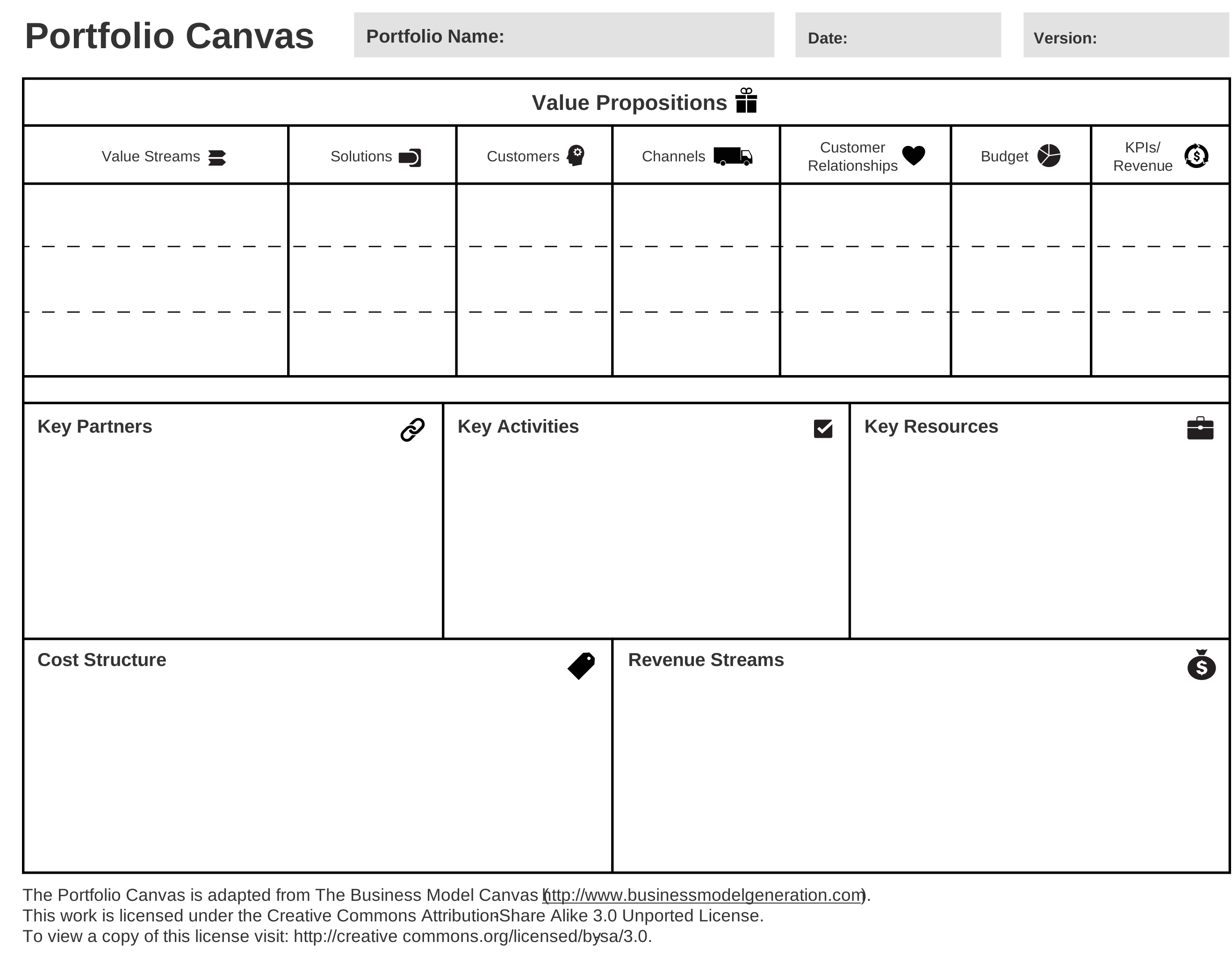
The portfolio canvas and its blocks are described below.
1. Value Propositions
The value propositions describe the customers and the value delivered by the solutions of each value stream, as well as the customer segments and relationships, budget, and KPIs /revenue. Create a separate row for each development value stream.
- Value Streams: The development value streams used to build the systems and capabilities that enable business processes in operational value streams or provide products and services to the operational value streams.
- Solutions: Each value stream produces one or more solutions, which are the products, services, or systems delivered to the customer, whether internal or external to the enterprise.
- Customers: Customers describe the internal or external customers for each value stream. It defines how the business views and treats various sets of customers differently based on their common attributes.
- Channels: Explains how the enterprise delivers its products and services to intermediaries, customers, and end-users. If serving external customers, this may include marketing and sales mechanisms used to reach customers (e.g., web, direct sales, brick-and-mortar store, distribution network). If serving internal customers, it captures the interfaces with internal stakeholders and end-users (for example, internal websites or custom IT applications).
- Customer Relationships: The types of customer relationships needed to effectively apply and leverage the business’ products and services. It describes the connections and communications with each customer segment. These relationships influence the design of solutions and the allocation of resources within the portfolio.
- Budget: Each value stream is assigned a Lean Budget, which includes operating, overhead, and capital expenses.
- KPIs / Revenue: Key Performance Indicators (KPIs) define the measures used to evaluate the results of the value stream investment.
2. Resources and Activities
The resources and activities describe the key partners, activities, and other resources needed to achieve the value propositions.
- Key Partners – The various buyer-supplier relationships and business alliances that facilitate achieving the value proposition.
- Key Activities – The enterprise’s most important actions to deliver its products and services.
- Key Resources – The enterprise’s critical physical, intellectual, financial, human, and other capabilities and assets used to achieve its objectives.
3. Cost Structure and Revenue Streams
The cost structure and revenue streams describe how the portfolio’s costs are structured and define how revenue or value is achieved.
- Cost Structure: Identifies the most significant costs in the portfolio’s business model, including the structural aspects, such as license costs, development labs, and costs of external services. Building cyber-physical systems also have other costs (for example, hardware and firmware), which must be considered.
- Revenue Streams: If the development value streams monetize directly, list the types and sources of revenue from customers. Note the major sources of revenue and how the customer is charged (fixed price, usage-based, and so on). For internal customers, non-profits, and government agencies, describe the value of the solutions.
Capturing the Current State of the Portfolio
The current state canvas represents the as-is state for the portfolio, enabling alignment of the organization on its structure, purpose, and status. One way to capture the current state is to assemble one or more teams to create a shared understanding. The team should include the Agile Release Train (ART), value stream Business Owners, Lean Portfolio Management (LPM), Epic Owners, Architects, RTEs, Product and Solution Management, Product Owners, and other portfolio stakeholders.
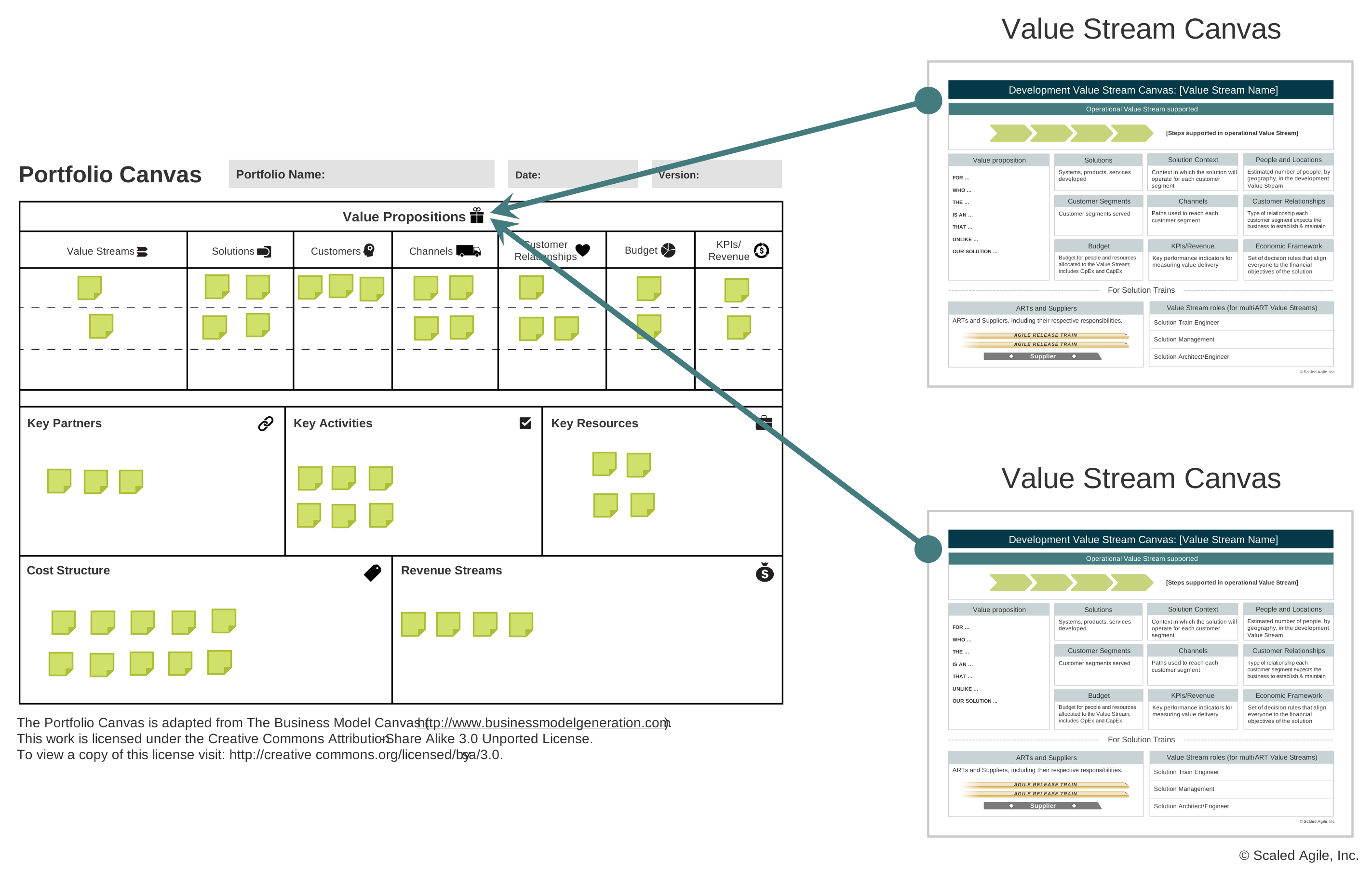
A straightforward approach to capturing the current state is to iterate through each canvas’s building blocks, summarizing the essential aspects. Teams typically use sticky (virtual or physical) notes with a few keywords to fill out each building block (Figure 3). The real power of the canvas is its ability to represent the entire portfolio on one page and to gain insights.
As part of filling out the current state portfolio canvas, it can be helpful to reason further about each value proposition. One way to do this is to create separate Value Stream canvases (see this topic in the value stream article), which are then rolled up to the portfolio (Figure 3). The appropriate stakeholders in each value stream should develop their Value Stream Canvas.
Envisioning the Future State
The next step is to envision the future state, which helps define the vision for the portfolio. The difference between the current and future state represents the gap, translated into the vision to attain the future state.
Understanding Opportunities and Threats
There are many tools and techniques to help understand the opportunities for the future state. Some of these techniques include the SWOT analysis and TOWS strategic options matrix, which can help develop a plan for the future so that the business can survive and thrive in the long run.
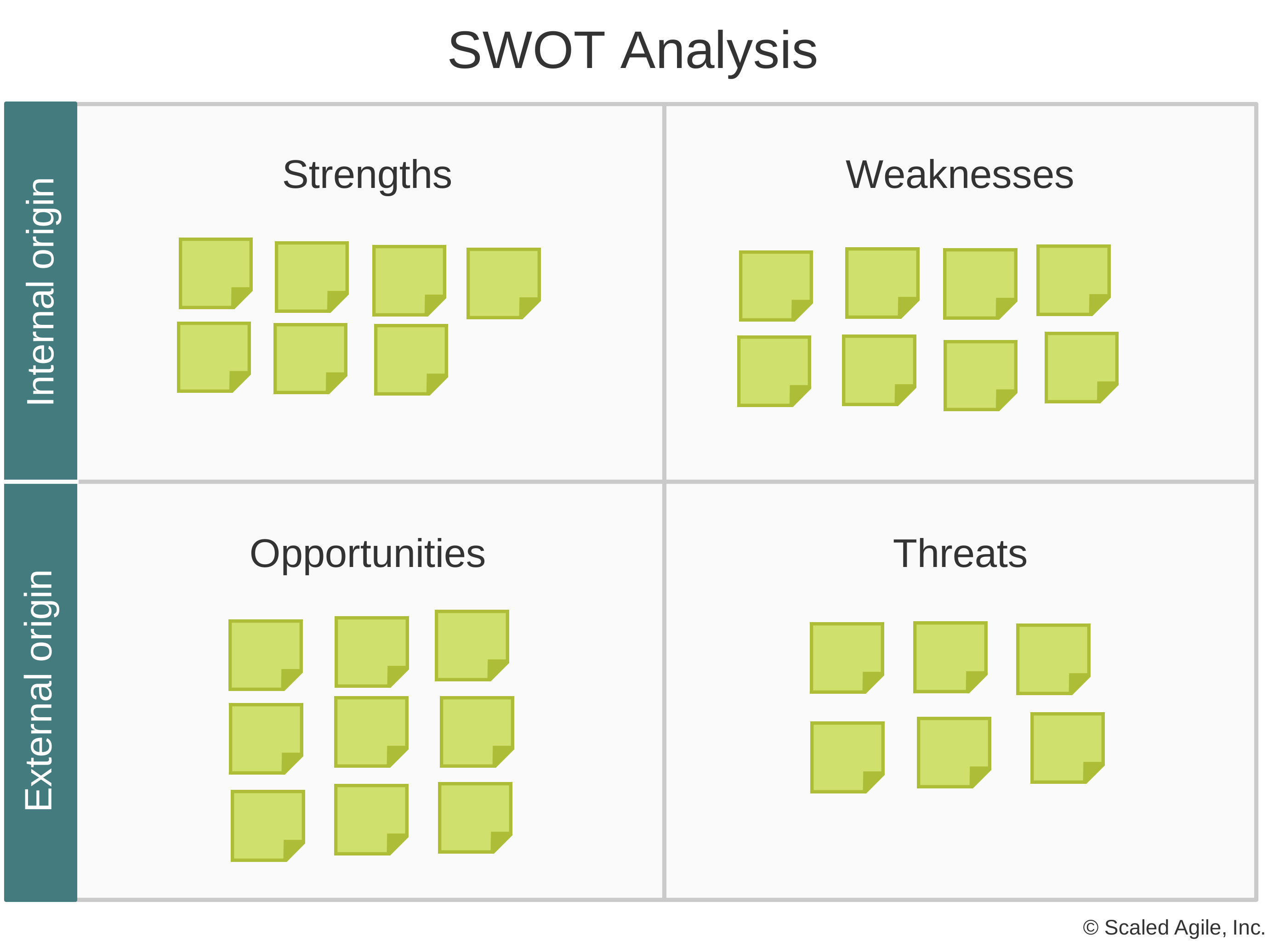
The SWOT and TOWS analysis are meant to be used together. The SWOT analysis (Figure 4) is used to identify the strengths, weaknesses, opportunities, and threats related to the current business situation.
The information from the SWOT analysis is used to fill in the strengths, weaknesses, opportunities, and threats of the TOWS strategic options matrix (Figure 5) using the four outer boxes (for example, Internal Strengths, External Opportunities).
The critical difference between the SWOT and TOWS analysis is the outcomes that they create. A SWOT analysis is a great way to uncover the current situation of your value stream, product, or portfolio. At the same time, TOWS is used primarily for identifying strategic options to create a better future state.
![Figure 5. TOWS Strategic Options Matrix [3]](/wp-content/uploads/2022/11/Portfolio_Vision_F05.svg)
Evaluating Alternatives to Determine a Future State
The portfolio’s Strategic Themes and SWOT and TOWS analysis are critical inputs to exploring alternatives for the future state. LPM uses the current state portfolio canvas as a starting point to explore how the portfolio could evolve in alignment with the strategic themes. Start by selecting a specific block in the portfolio canvas, identifying a potential change or opportunity, and then explore how it impacts the other parts of the canvas (Figure 6).
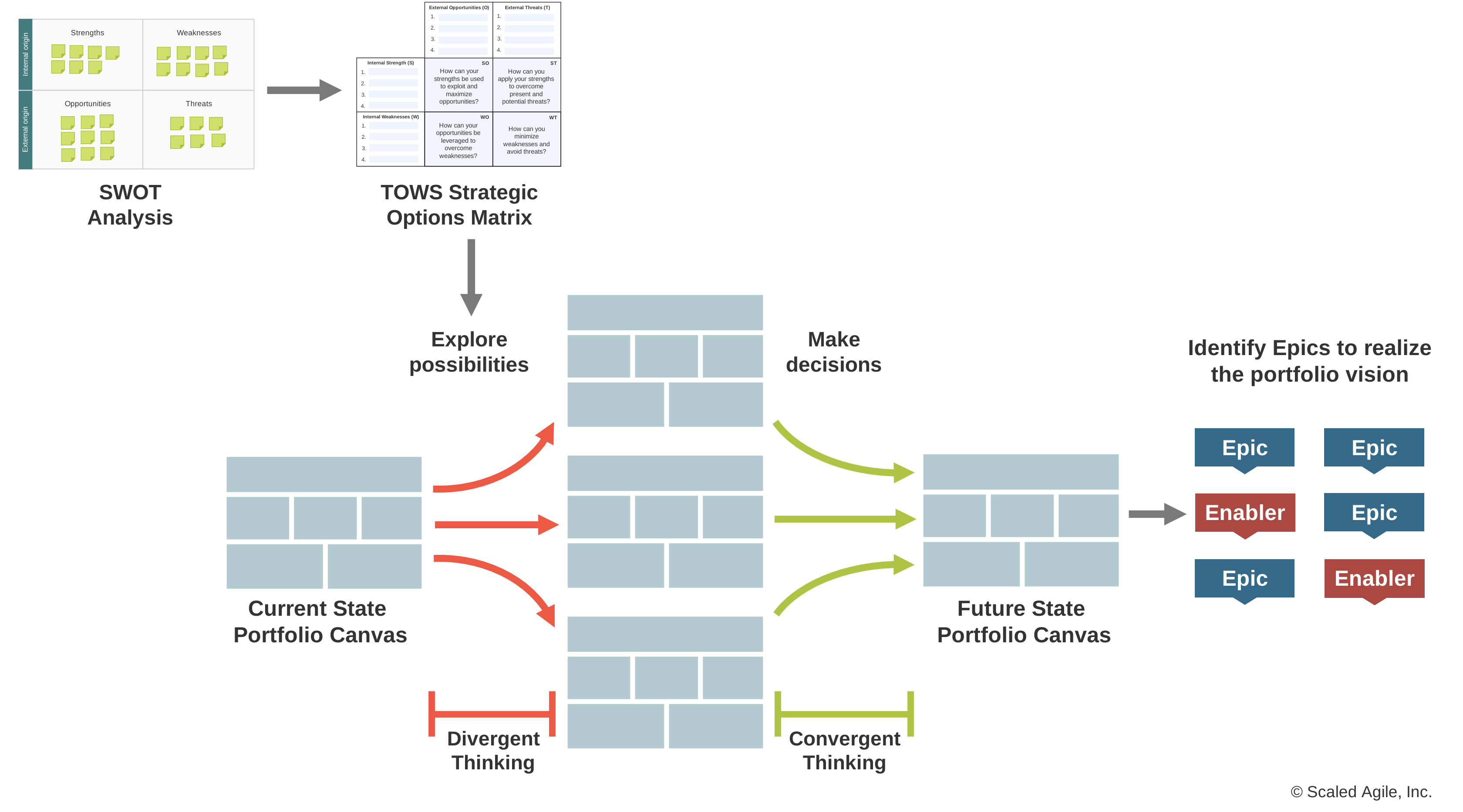
For example, consider a portfolio for a printing company that has invested heavily in the on-demand printing of books. The value stream may want to capture a different customer segment as the foundation of the future state (such as customized books for schools) or may explore a change in customer relationships (such as moving to a self-service model). Each of these changes may impact other blocks on the canvas.
Some changes to achieve the future state will require investing in large initiatives. The teams must create business and enabler epics that feed directly into the Portfolio Backlog.
Maintaining the Portfolio Vision
The creation of the vision is not a once-and-done exercise. It is updated by using the current and future state Portfolio Canvas. As new information about the evolving set of portfolio solutions emerges, portfolio stakeholders periodically review and update the canvas and the vision. Other triggers include the introduction of new solutions, mergers and acquisitions, the market rhythms of the portfolio defined in the portfolio Roadmap, and other strategic changes that may affect the portfolio’s value streams or solutions.
Learn More
[1] Pink, Daniel H. Drive: The Surprising Truth About What Motivates Us. Riverhead Books, 2011. [2] Heath, Chip, and Dan Heath. Switch: How to Change Things When Change Is Hard. Crown Business, 2010. [3] Osterwalder, Alexander, and Yves Pigneur. Business Model Generation: A Handbook for Visionaries, Game Changers, and Challengers. John Wiley and Sons, 2010. [4] Brunger, Bruce A. The T.O.W.S. Matrix: Developing Strategic Options from an External-Internal Analysis. Retrieved October 12, 2023, from https://brungerblog.wordpress.com/2016/03/20/tows-matrix-for-marketing-brainstorming/Last update: 12 October 2023