
Everything should be made as simple as possible, but not simpler.
—Albert Einstein [1]
Enterprise Architect
Ready to start learning?
Use our finder to explore current offerings or learn more about a specific course
The Enterprise Architect is responsible for establishing the portfolio’s technology vision, strategy, and roadmap.
Enterprise Architects (EAs) provide the vision, evolution, and communication of an enterprise’s technical architecture, creating the strategy and portfolio-level technical roadmaps for new and innovative technologies. This often includes incorporating Cloud, Big Data, and AI technologies to create strategic advantage.
EAs collaborate with System Architects and Solution Architects to guide the technical design of Solutions developed by Agile Release Trains (ARTs) and Solution Trains. They lead Enabler Epics through the Portfolio Kanban, which builds the more significant architecture for the portfolio’s solutions. Relying on continuous feedback, EAs foster adaptive design and engineering practices and drive ARTs and teams to unite around a shared technical vision.
Details
EAs guide the portfolio’s value streams as they build new elements of an organization’s enterprise architecture. For example, its data and information, applications, technologies, and finding ways to use these architectural elements to meet the company’s organizational standards and improve its overall performance.
Good strategic technical planning, communication, and visibility can result in optimal system performance, significantly improving Business Agility. EAs provide some Architectural Runway and governance, supporting current and future needs, such as usability and behavioral constructs across the enterprise’s solutions. System and Solution Architects offer this guidance for Agile Release Trains (ARTs) and Solution Trains.
Collaboration Among Architecture Roles
SAFe defines three architect roles, Enterprise, Solution, and System Architect, that address the Portfolio, Large Solution, and Essential levels. These architects regularly collaborate to ensure alignment and address issues and concerns as they arise. Figure 1 illustrates a high-level overview of their responsibilities.
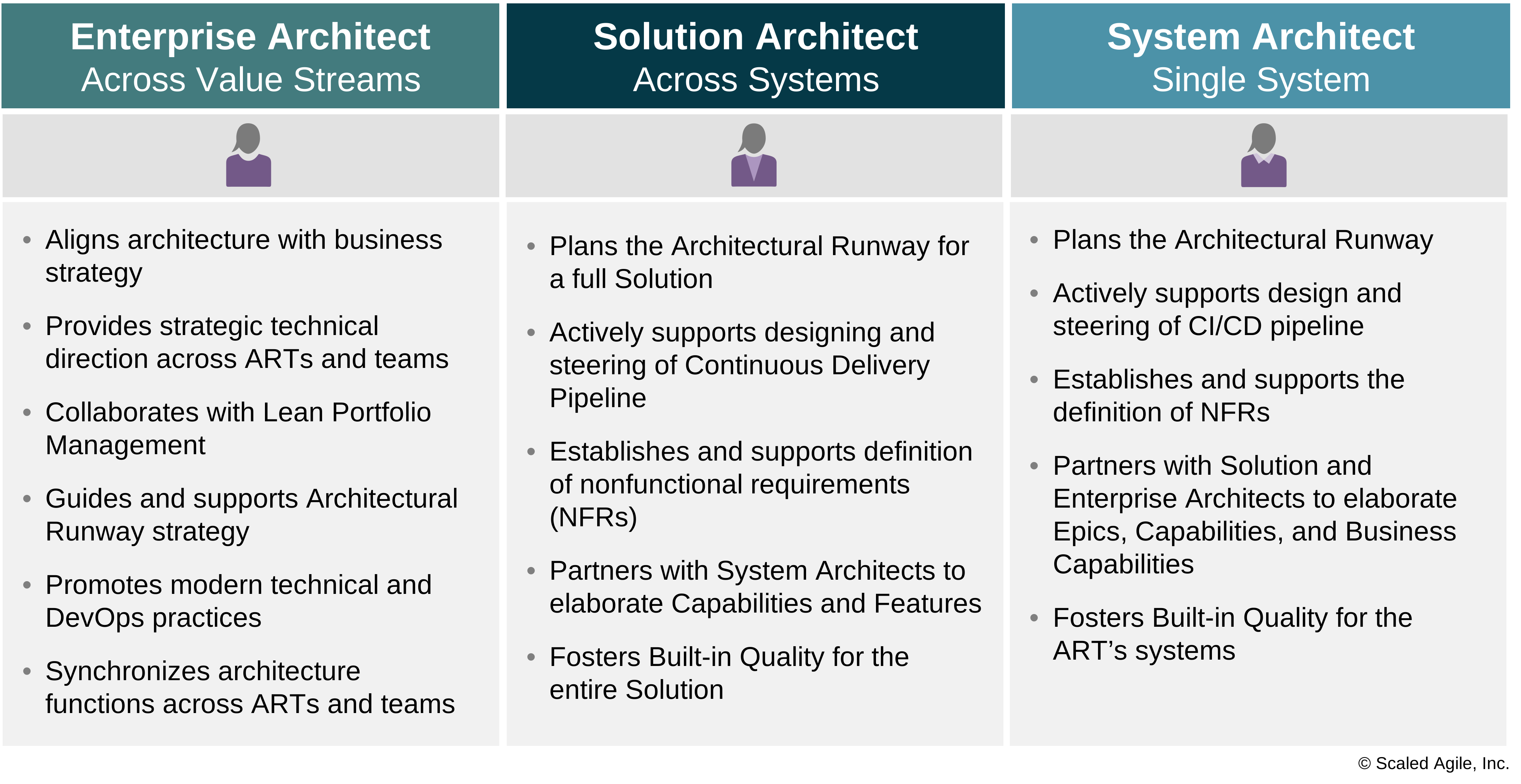
In addition, the relationship between business and technology strategy requires active collaboration between architects and other SAFe roles to ensure that the architecture meets the current and evolving needs of the business and its customers.
Enterprise Architecture Strategy
The strategy for enterprise architecture enables embracing organizational change faster, providing a significant competitive advantage (Figure 2).
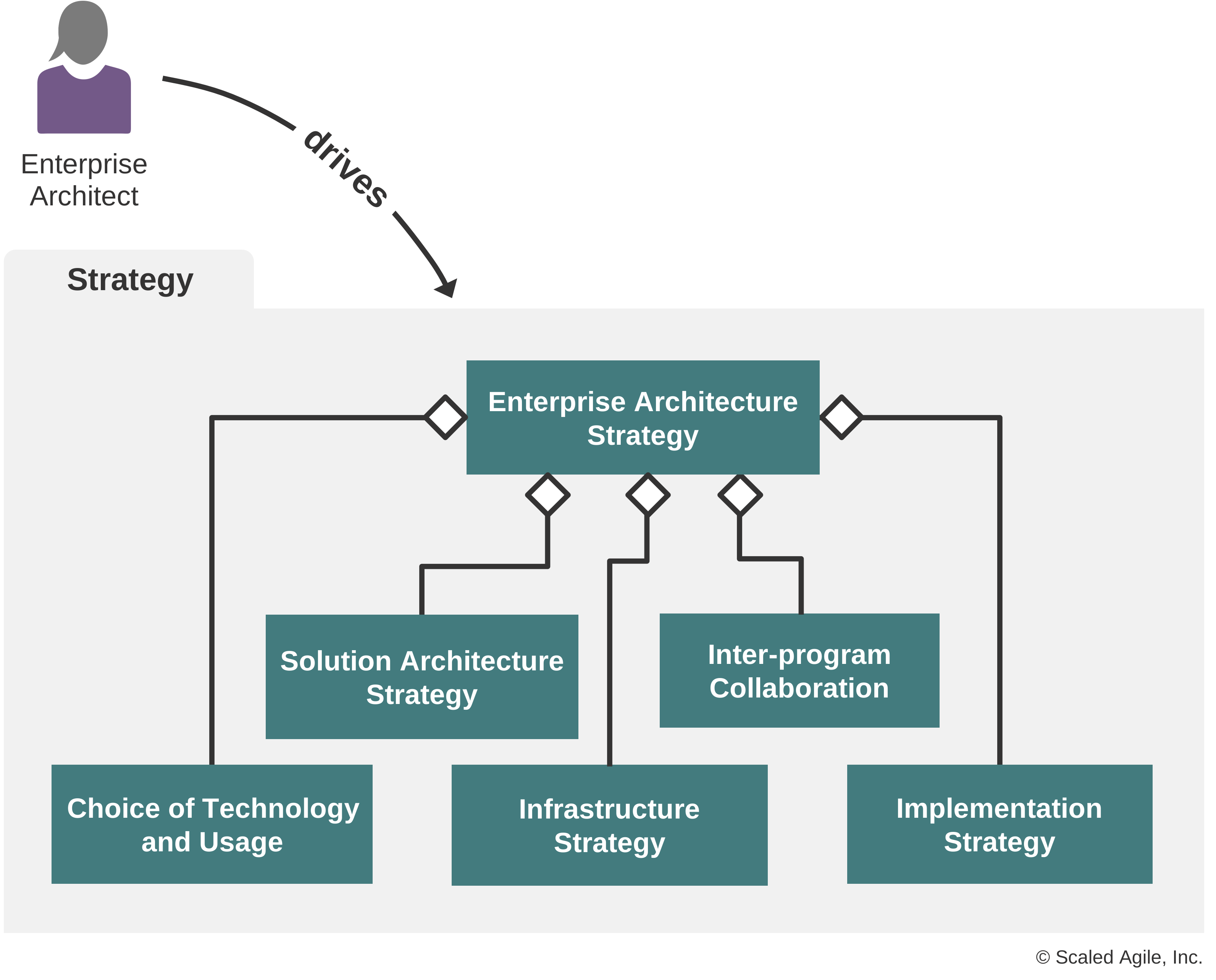
- Choice of technology and usage – Choosing appropriate technologies is a critical element of strategy development. Supporting activities include research and prototyping, understanding applicability and scope, and assessing the maturity of innovative new technologies.
- Solution architecture strategy – The Enterprise Architect works closely with the Solution and System Architects to ensure that individual program and product strategies align with business and technical objectives. For example, emerging solutions to local problems should be consistent with the overall enterprise strategy. When that’s not the case, decisions should be explicit, as the inconsistent option may well influence future enterprise strategy.
- Infrastructure strategy – Developing and maintaining plans for infrastructure can be more challenging, as it overlaps with the work of System Architects. Some of these responsibilities include the reuse of configuration patterns, common physical infrastructure, knowledge sharing across ARTs and Solution Trains, and—especially—System Teams. Also, some of the development and deployment infrastructure will likely intersect with internal IT systems. The Enterprise Architect can provide direction there as well.
- Inter-ART collaboration – Standard design and infrastructure practices help simplify and align architecture across different ARTs. However, it’s also essential that value streams and ARTs have sufficient degrees of freedom. Otherwise, innovation decreases. Therefore, both standard and variable architectural designs should be actively discussed and shared among the ARTs.
- Implementation strategy – The importance of an active, incremental Agile implementation strategy can hardly be overstated. Building the technical foundation for business epics into the architectural runway must be a gradual process. Continuous learning and fast feedback allow architecture and business functionality to grow synchronously over time. This rapid pace of change requires Agile Teams to refactor their code as necessary and to preserve multiple possible design options wherever practical. Abstraction and generalization help avoid binding specificity too early, which maintains architectural flexibility for future business needs.
Responsibilities
The primary responsibilities of Enterprise Architects fall into four main areas, as illustrated in Figure 3. Each responsibility area is described in the sections that follow.
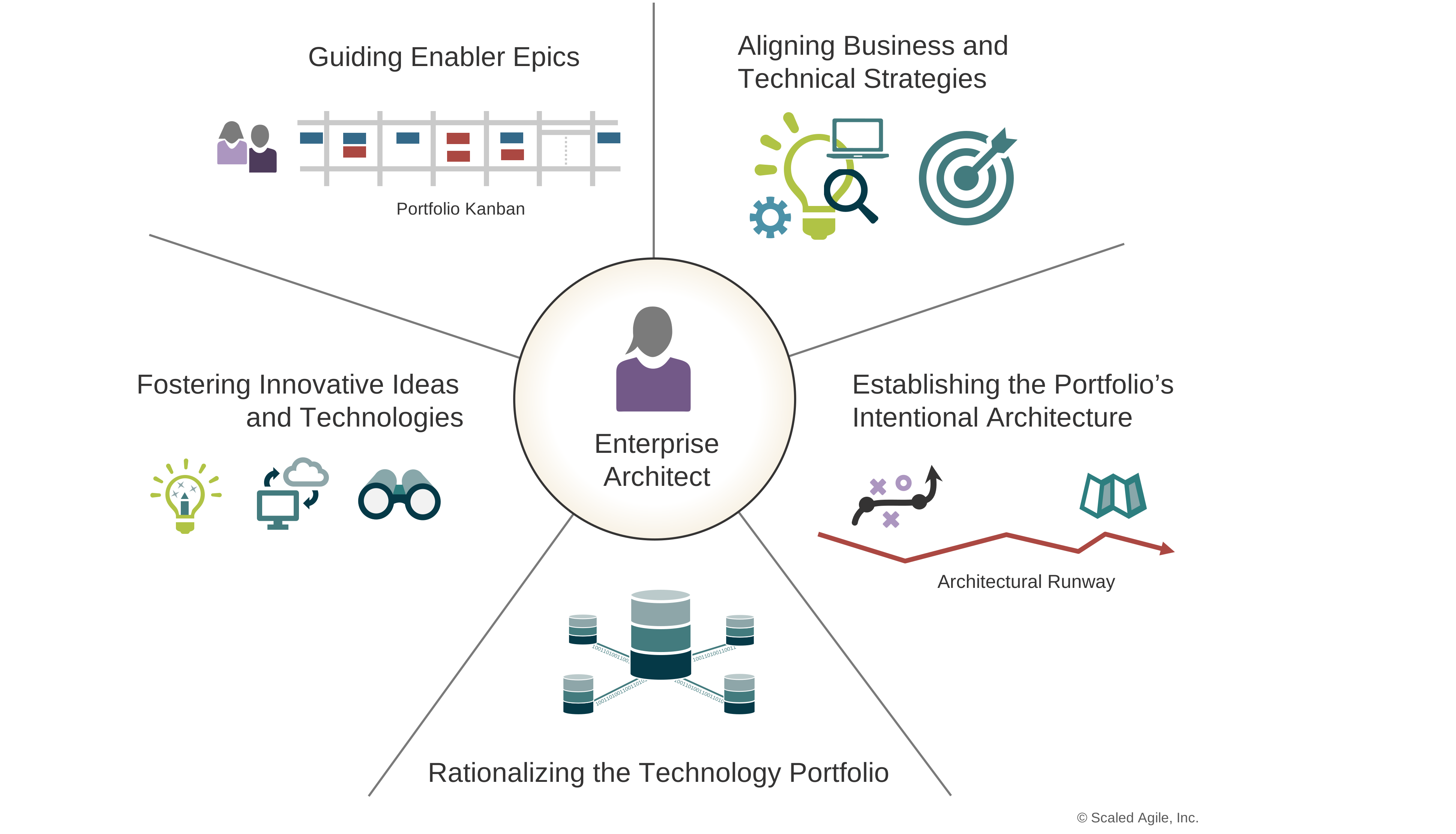
Aligning Business and Technical Strategies
Enterprise Architects are critical for understanding the connection between new technology trends and business. They help the organization identify, evaluate, and respond to opportunities and trends in its broader ecosystem. An enterprise’s complexity needs to be governed to make innovation easier. Otherwise, change becomes nearly impossible if the architecture is tightly coupled. EAs can create room for innovation by reducing this complexity and facilitating change. For example, they are actively involved in the following:
- Aligning organization design with optimal architectural design – The organizational design of Agile Teams and Agile Release Trains (ARTs) should align with the desired technical architecture, not the other way around.
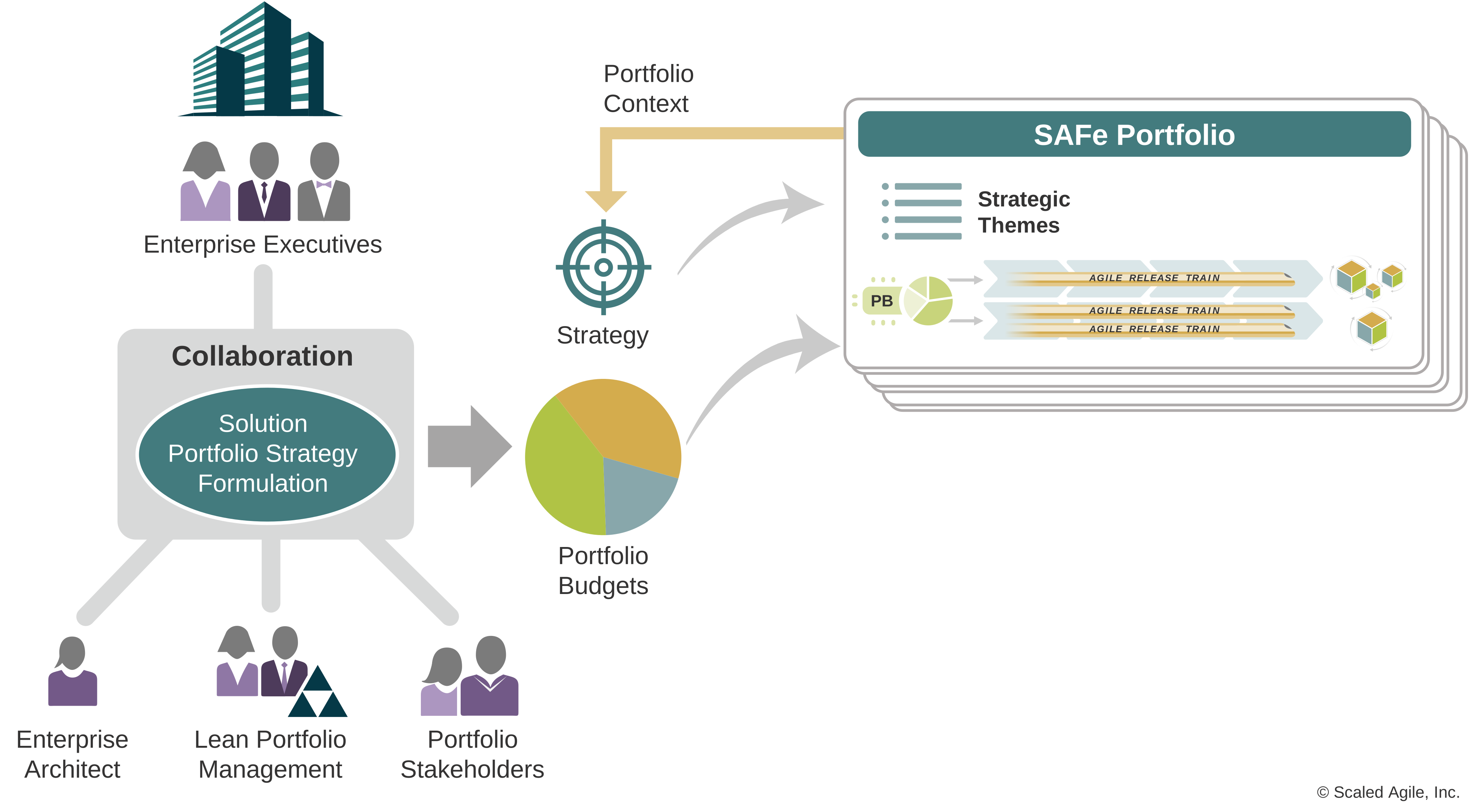
- Defining Strategic Themes – Since EAs have a broad knowledge of technologies, business domains, reference architectures, security, design thinking, architectural frameworks, governance, risk, and compliance, their input is vital to creating Strategic Themes. EAs collaborate with Lean Portfolio Management (LPM), enterprise executives, and portfolio stakeholders to develop the strategic themes for a specific portfolio, as illustrated in Figure 4.
- Communicating vision and business strategy – EAs need to understand and communicate strategic themes and other business drivers for architecture to System, Solution and non-technical stakeholders.
- Responding to emerging opportunities and threats – Providing strategic technical direction across value streams, EAs ensure the organization can take advantage of emerging opportunities while responding to and mitigating threats.
- Offering technical recommendations – EAs provide guidance and suggestions for developing and delivering technology stacks, managing interoperability and application program interfaces (APIs), hosting and cloud computing strategy, and governing artificial intelligence (AI) and big data.
- Maintaining relationships – EAs should create and maintain personal connections with ART and Solution Train Architects and Agile Teams through the following types of tasks and events:
- Getting feedback on current enterprise-wide initiatives
- Participating in architecture and design Communities of Practice
- Attending System Demos whenever critical redesign or architectural work is in progress
- Participating in PI Planning events to guide the implementation of enabler epics and features.
- Identifying value streams – EAs assist the Value Management Office (VMO) and the Lean-Agile Center of Excellence (LACE) in identifying and designing Development Value Streams that optimize the flow of value for new and existing technology initiatives.
- Enabling Built-in Quality – The Systems Team helps realize the architectural vision by building the supporting infrastructure that enables Agile Teams to design, implement, test, and deliver value using Built-In Quality. EAs coordinate with System and Solution Architects to ensure their solutions align with the broader technical vision.
Establish the Portfolio’s Intentional Architecture
EAs help organizations respond to new business challenges with larger-scale architectural initiatives that require some intentionality and planning. This intentionality provides Agile Teams with a solid foundation to work independently, allowing the proper balance of intentional architecture and emergent design. This work typically involves:
- Maintaining the architectural runway – EAs lead the strategy for building and maintaining the architectural runway. One way they do this is by serving as Epic Owners for portfolio Enabler Epics. They also closely collaborate with System and Solution Architects and Agile Teams to guide the evolution of solutions, existing code, and technical infrastructure needed to implement near-term features without excessive redesign and delay.
- Aligning technology approaches across ARTs – EAs actively engage with System and Solution Architects, ensuring emergent design choices are made with an understanding of the overall architectural strategy and roadmap, minimizing technology complexity, and avoiding unnecessary duplication of capabilities or solutions.
- Setting technology direction – EAs work with LPM and the VMO to determine technology direction. EAs define and communicate the architectural Roadmap, ensuring the business invests in the right systems and services to support current and future business needs.
- Coding and pattern reuse – EAs work with System and Solution Architects and Agile Teams to help reuse code and existing design patterns to implement new business and technology functionality. They also influence modeling, design, and coding practices.
- Synchronizing technical disciplines – During a PI, EAs help synchronize various disciplines across solutions whenever applicable: system and data security and quality, production infrastructure, solution user experience (Lean UX), and Nonfunctional Requirements (NFRs).
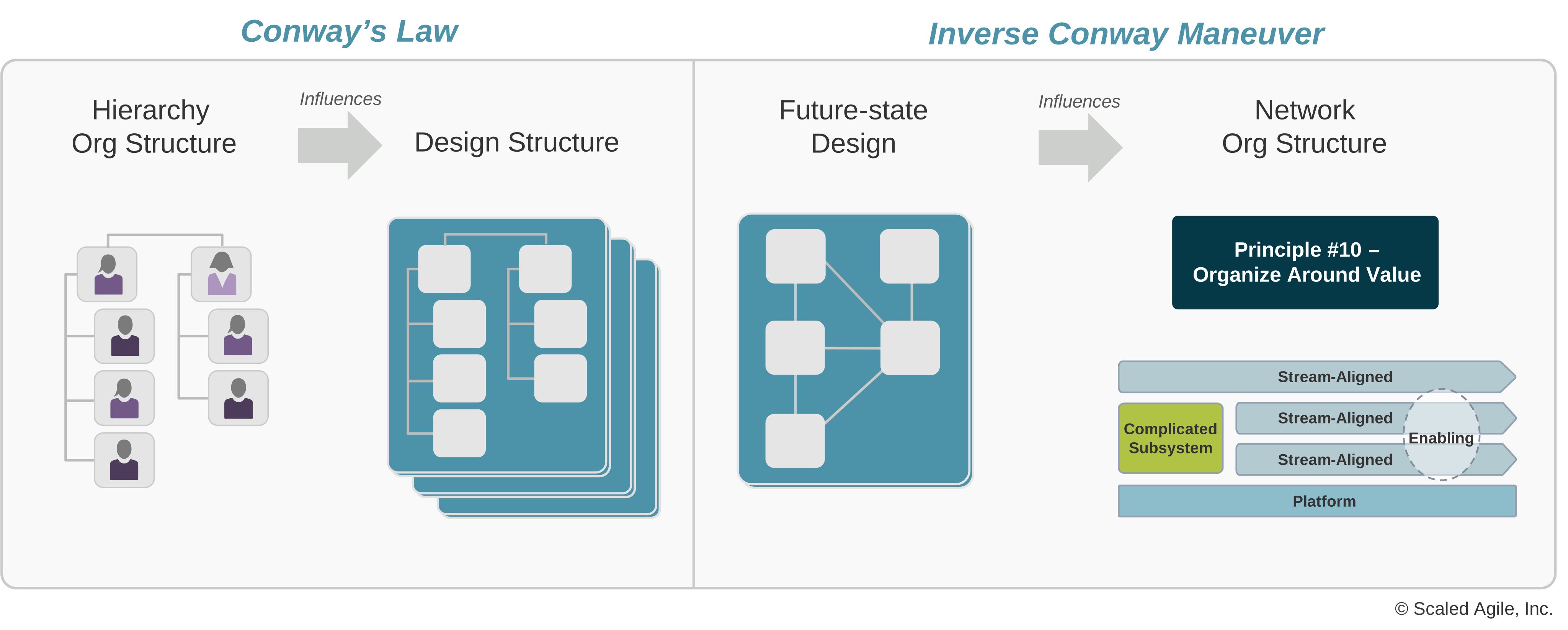
- Defining organizational structures that promote the desired architecture – Understanding Conway’s Law is essential to organizational design. According to Conway, organizations design systems that closely match the organizational structures in the hierarchy (see Business Agility) [2]. Instead, use the system’s future-state design to influence the organizational design, specifically when identifying value streams (see SAFe Principle #10, Organize Around Value) and optimizing teams on the ART with Team Topologies. This evolution is known as the Inverse Conway Maneuver [3].
Rationalizing the Technology Portfolio
EAs help rationalize the technology portfolio by reviewing and streamlining the existing application portfolio to improve efficiency, reduce complexity, and lower the total cost of ownership (TCO).
Application rationalization improves the overall effectiveness of IT by simplifying the technical landscape. This helps ensure that organizations are not running redundant applications, overspending on license costs, hardware, networking, or unnecessary infrastructure. EAs typically work with System and Solution Architects to:
- Eliminate redundancy – Consolidating similar applications reduces IT spending.
- Minimize unnecessary IT spending – With a strong application rationalization strategy and continual maintenance, a well-organized technical architecture will provide the data needed to help define the necessity of future applications.
- Reduce IT cost – It’s not uncommon to uncover substantial savings after application rationalization. This saving can be used to reinvest in innovative endeavors such as artificial intelligence and machine learning, big data, and cloud initiatives.
- Reduce complexity – Eliminating unused applications and moving to the cloud can reduce complexity via centralized management, automation, hardened security, consistent tools, technologies, and processes.
- Support procurement – EAs can help streamline procurement and renewal planning as organizations review existing purchasing structures, products, license agreements, and other transactions.
- Reduce training overhead – Every application used at an organization requires vendors or in-house staff support, which can be expensive. If there are fewer applications to support, there will be less money spent on maintaining these apps.
Fostering Innovative Ideas and Technologies
Decentralized decision-making and execution are hallmarks of SAFe. To enable the decentralization of architecture while maintaining solution integrity, EAs support the establishment and evolution of architectural standards. These standards help provide alignment on how to build solutions the right way. EAs, in close partnership with System and Solution Architects, establish, foster, and evolve architectural standards and apply them in the following ways:
- Achieving business outcomes – Ensure that the portfolio can effectively reach its desired business outcomes by using new technologies, practices, and standards.
- Aligning technical decisions – It can be challenging to align decision-making for technology across one or more portfolios. EAs help coordinate and develop common standards and architectures for system and data security, quality, production infrastructure, and Nonfunctional Requirements (NFRs). These include internal enterprise architecture standards and external ones such as TOGAF, DODAF, and others where applicable.
- Supporting the development environment – Facilitating the reuse of code, components, and proven design patterns. Influencing and promoting good practices for modeling, system design, and coding. Supporting the Continuous Delivery Pipeline, DevOps, and other flow capabilities (see Portfolio Flow) to get faster customer feedback and time to market.
- Retiring obsolete technologies – Helps the portfolio’s value streams migrate off outdated technologies and decommission solutions that are no longer fit for purpose.
Guiding Enabler Epics
Enabler epics are often created by EAs who support the portfolio backlog and steer them through the Portfolio Kanban system, guiding their analysis and the information needed to estimate and implement them. For example, their role includes:
- Acting as an Epic Owner – EAs serve as Epic Owners for architectural initiatives, leading enabler epics through the Portfolio Kanban and their subsequent implementation.
- Splitting epics into features – Collaborate with Product and Solution Management and System and Solution Architects to decompose enabler epics into enabler features and capabilities and help prioritize these backlog items in their respective ART and Solution Train backlogs.
- Engaging in SAFe events – Participate in PI Planning, System, and Solution Demos whenever a critical activity is related to an enabler epic.
Enterprise Architects as Lean-Agile Leaders
The SAFe Lean-Agile Mindset promotes a healthy work environment where everyone operates on facts, verifies assumptions, and reduces uncertainty through frequent experiments. This mindset is critical for EAs, who work one (or two) steps removed from day-to-day development activities. They have the most significant impact by teaching, mentoring, and helping improve the effectiveness of Agile Teams rather than directly specifying the solution designs. Instead, they contribute to the technical Vision and roadmap to chart a course for the solution.
Now more than ever, Business Agility is needed to compete and thrive in the age of digital and software. This new reality requires an adaptive technology strategy, which in turn requires a Lean-Agile approach to enterprise architecture.
EAs who can adapt to new ways of thinking and working and stay up-to-date on the latest technological developments will be essential to the organization’s success. They also act on the human system that creates the technology to ensure greater agility and effectiveness. They are Lean-Agile Leaders responsible for mentoring teams and enhancing the overall capabilities of contributors. This new generation of EAs will need to lead by example, continuously learn, and model SAFe’s Lean-Agile mindset, values, principles, and practices. They help lead the change to the new way of working and organizing Agile Teams and ARTs around value.
EAs ensure the organization operates effectively by participating as a liaison or member of the LACE. They contribute to Value Stream Identification and Mapping workshops, coach engineers in Technical Agility, and actively participate in the adoption of SAFe.
Learn More
[1] Calaprice, Alice, ed. The Ultimate Quotable Einstein. Princeton University Press, 2013.
[2] Conway, Melvin E. “How Do Committees Invent?” Datamation, vol. 14, no. 5, 1968.
[3] Skelton, Matthew, and Manuel Pais. Team Topologies: Organizing Business and Technology Teams for Fast Flow. IT Revolution Press, 2019.
Bloomberg, Jason. The Agile Architecture Revolution: How Cloud Computing, REST–Based SOA, and Mobile Computing Are Changing Enterprise IT. Wiley, 2013.
Coplien, James O., and Gertrud Bjørnvig. Lean Architecture: for Agile Software Development. Wiley, 2010.
Last update: 6 July 2023