
Most strategy dialogues end up with executives talking at cross-purposes because … nobody knows exactly what is meant by vision and strategy, and no two people ever quite agree on which topics belong where. That is why, when you ask members of an executive team to describe and explain the corporate strategy, you frequently get wildly different answers. We just don’t have a good business discipline for converging on issues this abstract.
—Geoffrey Moore, Escape Velocity [1]
Lean Portfolio Management
Ready to start learning?
Use our finder to explore current offerings or learn more about a specific course
LPM provides an alignment and governance model for a specific portfolio, which contains a set of Development Value Streams (DVS) for a business domain in an Enterprise. Each DVS builds, supports, and maintains Solutions for Operational Value Streams (OVS). These solutions are delivered by the OVS to the enterprise’s external or internal Customers. Examples include developing an e-commerce website, medical device, or satellite and developing and deploying a software application within an enterprise for internal customers.
LPM is one of the seven core competencies essential to achieving Business Agility. Each core competency is supported by a self-assessment, enabling the enterprise to assess its proficiency. The Measure and Grow article provides a competency assessment and recommends improvement opportunities for implementing LPM.
Why Lean Portfolio Management?
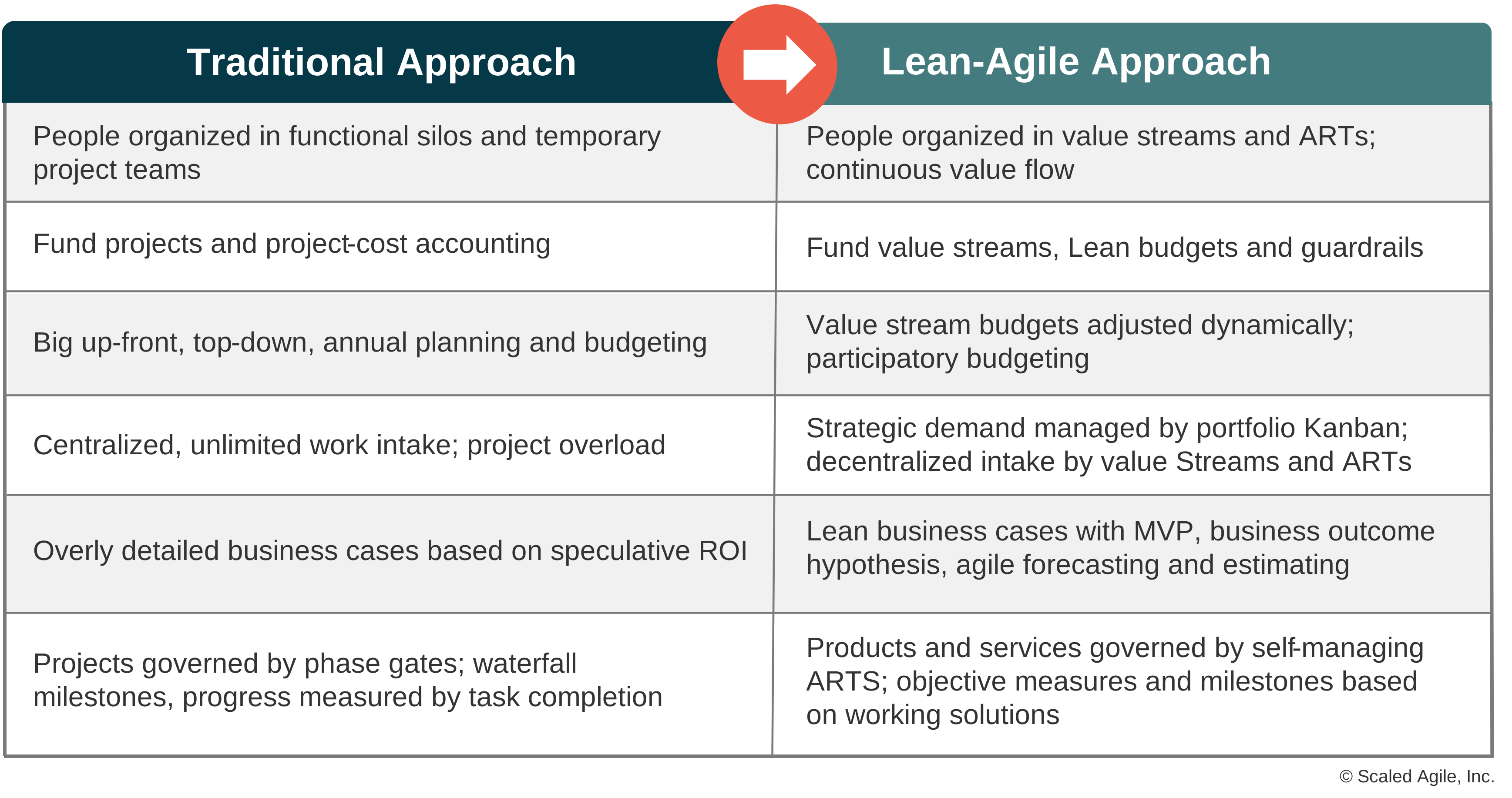
Traditional approaches to portfolio management were not designed to compete in the ‘age of software and digital.’ Enterprises face a higher degree of uncertainty and must deliver innovative solutions faster. Many legacy portfolio practices remain despite massive market changes and how businesses operate in the digital era.
Modernizing portfolio management is critical to supporting the Lean-Agile way of working and competing in this new reality. Fortunately, many enterprises have already traveled this path, and the change patterns are shown in Figure 1.
LPM has the highest decision-making and financial accountability for a portfolio’s solutions and development value streams. The people who fulfill the LPM function have various roles and titles and often reside in different parts of the organization’s hierarchy. Because LPM is vital to the enterprise, executives and business owners who understand the financial, technical, and business contexts hold strategy and investment funding responsibilities. They are accountable for the overall business outcomes and addressing the challenge of defining, communicating, and aligning strategy with execution.
Figure 2 illustrates the three dimensions of LPM, followed by a brief description and a set of roles needed for its responsibilities.
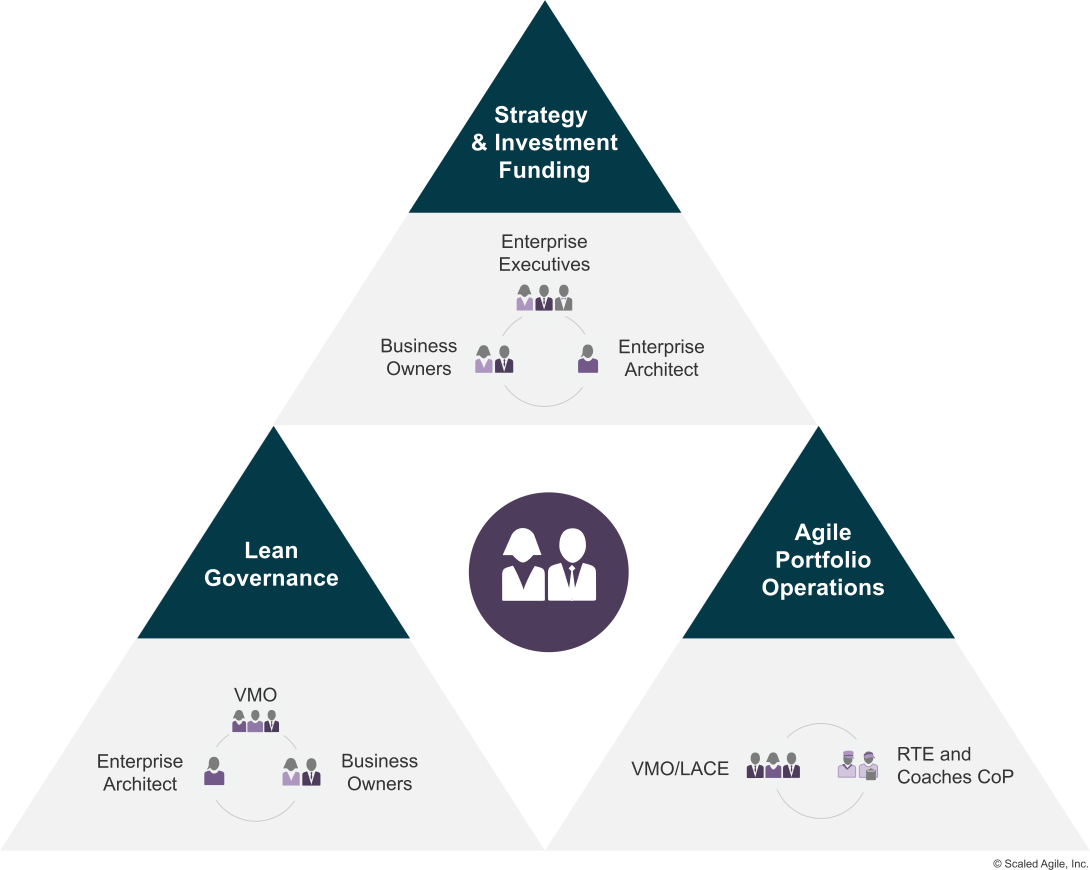
- Strategy & Investment Funding ensures the entire portfolio is aligned and funded to create and maintain the solutions needed to meet business targets.
- Agile Portfolio Operations coordinates and supports decentralized ART execution and fosters operational excellence.
- Lean Governance supports oversight of spending, audit, compliance, expenditure, measurement, and reporting.
The following sections describe these dimensions.
Strategy and Investment Funding
Strategy and investment funding ensures the entire portfolio is aligned and funded to create and maintain the solutions to meet business targets. An enterprise can only accomplish its ultimate business objectives by allocating the right investments to building the right things.
However, portfolio strategy is more than prioritization and selecting the best investments. The portfolio needs to understand its role in achieving the enterprise strategy. Therefore, the LPM function should understand the portfolio’s current state, develop a plan to evolve to a better, differentiated future state, and continuously adjust the vision and plan to address the changing business context.
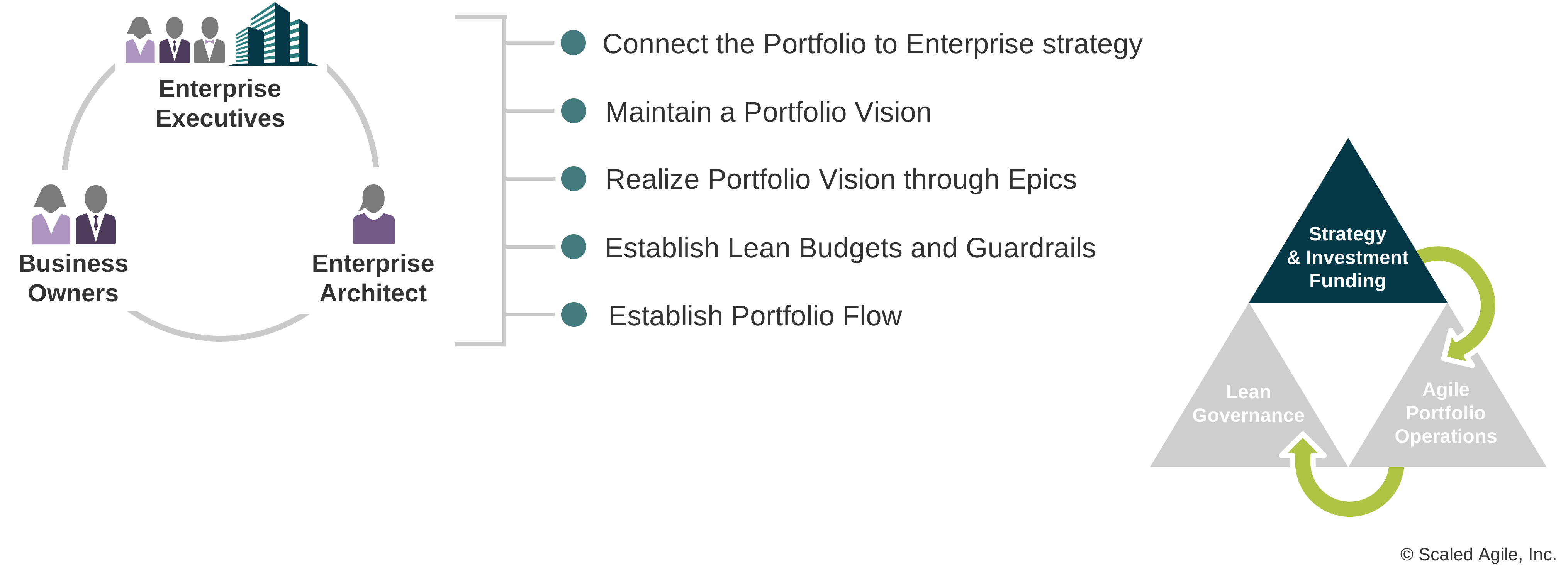
The strategy and investment funding responsibilities (Figure 3) require collaborations among enterprise executives, Business Owners, and Enterprise Architects, including portfolio stakeholders and other technologists. Each responsibility is described in the sections that follow.
Connect the Portfolio to the Enterprise Strategy
The portfolio strategy should support the enterprise’s broader business objectives. That’s why connecting the portfolio to the enterprise strategy is the primary responsibility of the strategy and investment funding collaboration.
Moreover, linking the portfolio to the organization’s strategy is bi-directional. The portfolio connects to the enterprise business strategy through Strategic Themes and the portfolio budget. It provides feedback to the enterprise via the portfolio context (described in the Enterprise article).
Maintain a Portfolio Vision
The Portfolio Vision describes the future state of its value streams and solutions. The current and future state difference represents the gap that LPM translates into the vision.
Effective collaboration across the portfolio requires the continuous communication of the portfolio vision, goals, ideas, and expectations openly and transparently. Business Owners should frequently communicate the vision and the strategic themes, for example, during PI planning, all-hands company meetings, and throughout the PI.
Gaining portfolio alignment requires people to work toward a shared goal and purpose beyond any individual, team, ART, or value stream. This ‘one portfolio’ mindset is critical to achieving success toward the strategic themes and having the agility to make mid-course corrections fluently. The quote below reminds us that alignment is not about centralized control.
“The more alignment you have, the more autonomy you can grant”
—Stephen Bungay, The Art of Action [2]
Instead, alignment provides a powerful way to turn the portfolio vision into an executable strategy. It unleashes all portfolio members’ creative and productive energy toward achieving its goals and unlocks people’s intrinsic motivation. Developing the vision and strategy can be difficult and time-consuming. However, this work is not a once-and-done exercise. As new information is learned about the portfolio’s solutions, including customer feedback and Key Performance Indicators (KPIs), the LPM function periodically reviews the portfolio canvas, for example, quarterly. They explore scenarios where the portfolio could evolve to a better differentiated future state aligned with the strategic themes.
Enterprise Architecture
The road to a better future state should be paved with architectural principles and practices that enable the ongoing evolution of the portfolio’s solutions. This makes enterprise architecture a critical component of strategy and investment funding. Enterprise Architects help translate the business vision and strategy into effective technology plans. They promote adaptive design and engineering practices to drive the portfolio’s architectural initiatives. Enterprise Architects also facilitate the reuse of hardware and software components and proven design patterns to help value streams develop and enhance solutions faster and with higher quality.
Organizations must respond simultaneously to new business challenges and implement larger-scale architectural initiatives requiring intentionality and planning. Enterprise Architects help improve results by offering architectural governance and fostering the right balance between intentional and emergent design. Achieving this balance is essential to maintaining a healthy Architectural Runway across the portfolio and developing large-scale systems effectively.
Portfolio Roadmap
The best way to predict the portfolio’s future state is to create it through a purposeful and flexible portfolio roadmap (Figure 4). Because some portfolio initiatives may take years to develop and are safety critical (for example, aerospace, autonomous vehicles, and cyber-physical systems), a larger planning horizon beyond a few PIs may be required. The portfolio and solution roadmaps are bi-directional; each roadmap influences the other.
The portfolio roadmap integrates lower-level roadmaps into a more comprehensive view. The initiatives in this roadmap may influence the direction and timing of the solution roadmaps, as Figure 4 illustrates.
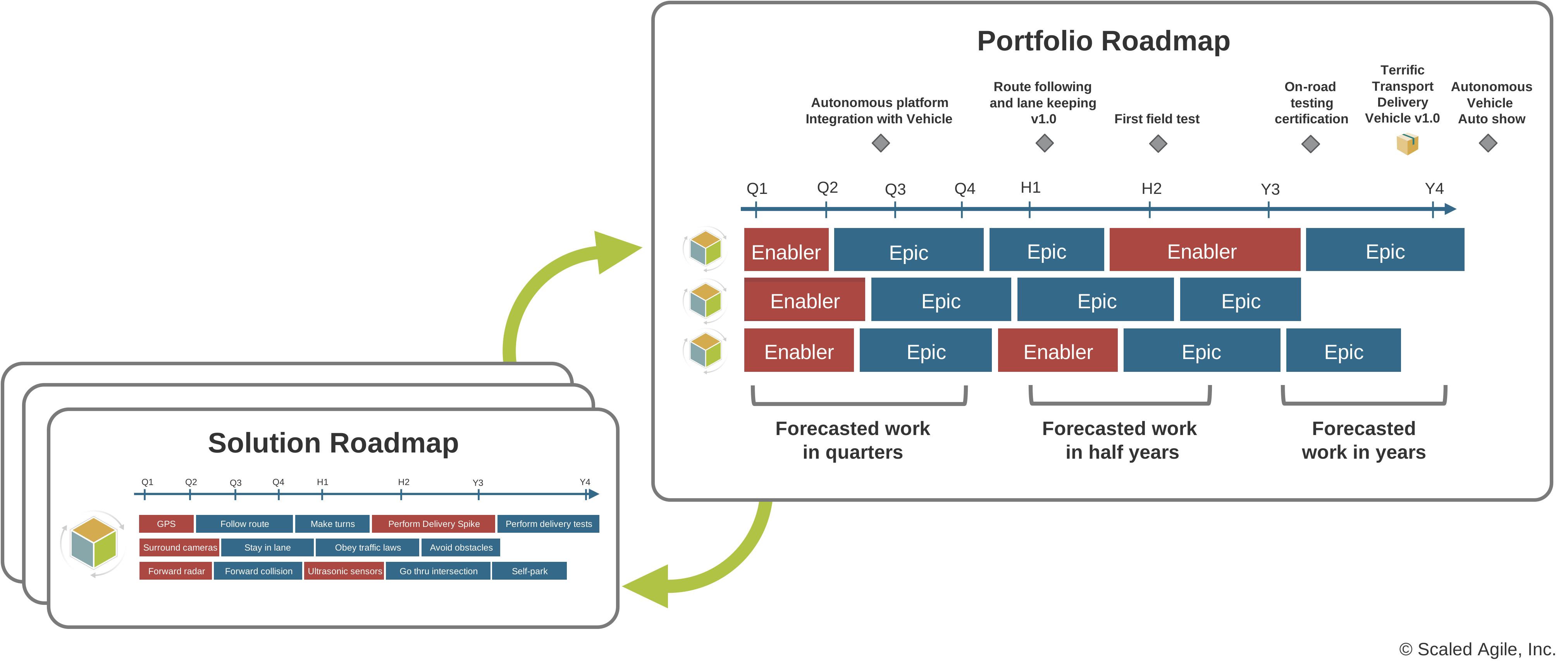
Since the portfolio roadmap may span multiple years, estimating longer-term initiatives requires Agile methods. However, every enterprise should be cautious about such forecasts. While long-term predictability is a worthy goal, use flexible rolling-wave roadmaps to replace fixed plans. Lean-Agile Leaders should know that every long-term commitment decreases the organization’s agility.
Realize Portfolio Vision Through Epics
Many vision changes will require large portfolio initiatives to achieve the future state. Business epics directly deliver business value, while Enabler epics advance the architectural runway to support upcoming business or technical needs. Since epics often have lots of uncertainty, it’s good practice to use the SAFe Lean Startup Cycle (described in Epics) for their implementation.
Understanding the epics’ forecasted costs and gaining a high-level view of when the potential new value can be delivered is essential for comparing investments. This forecast includes the MVP, proving or disproving the epic’s hypothesis and implementation if a persevere decision is made. Sometimes overlooked, contractors and Suppliers should be part of the cost equation.
Establish Lean Budgets and Guardrails
Lean Budgets and Guardrails offer funding and governance practices that improve development throughput while maintaining financial and fitness-for-use governance. This new funding model allows the enterprise to eliminate or reduce the need for traditional project-based funding and cost accounting, reducing friction, delays, and overhead. Lean budgets provide funding for value streams aligned with the business strategy and current strategic themes. Guardrails support these budgets by providing governance and spending policies and practices.
Establish Portfolio Flow
Portfolio flow describes how portfolio epics move through their lifecycle, including limiting the number of significant and typically cross-cutting initiatives in progress to match the portfolio’s capacity. LPM uses the portfolio Kanban system to visualize and limit work-in-process (WIP), work in smaller batch sizes, and reduce the length of development queues. Successfully establishing flow requires knowing the total capacity for new development work versus ongoing maintenance and support activities. The enterprise can objectively evaluate and originate epics only when this balance is understood.
Agile Portfolio Operations
Agile portfolio operations coordinate and support decentralized ART execution and enable operational excellence. SAFe principles and the Lean-Agile mindset foster the decentralization of strategy execution to empower Agile Release Trains (ARTs) and Solution Trains.
The Agile portfolio operations collaboration and responsibilities (Figure 5) require the active engagement of the Value Management Office (VMO), Lean-Agile Center of Excellence (LACE), Release Train Engineer (RTE), and Scrum Master/Team Coach CoP. Figure 5. illustrates each of these responsibilities, followed by a description of each.
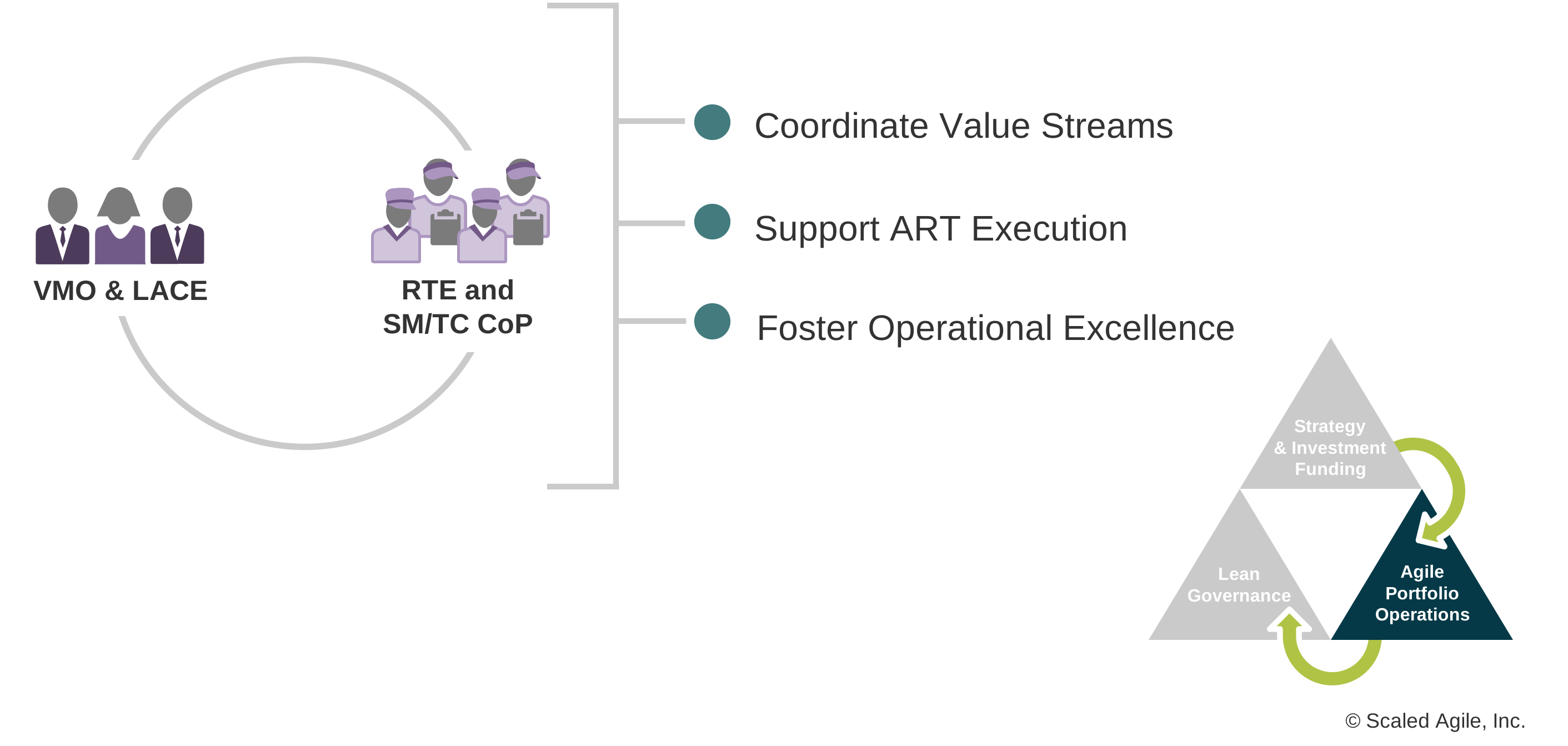
Coordinate Value Streams
Although many value streams operate independently, cooperation among solutions can provide unique, differentiating portfolio-level capabilities and benefits that competitors can’t match. Value Stream coordination defines how to manage dependencies and exploit the opportunities that exist only in the interconnections between value streams. To this end, Lean-Agile leaders understand their value streams’ challenges and opportunities. They make them as independent as possible while simultaneously interconnecting and coordinating them with the enterprise’s larger purpose.
Support ART Execution
The LPM function can help cultivate and apply successful ART execution patterns across the portfolio with the assistance of the Lean-Agile Center of Excellence (LACE). The LACE is often responsible for leading operational excellence with the help of an RTE and Scrum Master/Team Coach CoP. Together, they can optimize, address, and debug issues from Agile Teams, ARTs, and value streams. The LACE and CoPs provide a forum for sharing effective Agile ART execution, flow practices, and other knowledge. They become a continuous energy source to power the enterprise through the necessary organizational changes.
Foster Operational Excellence
Operational excellence focuses on continually improving efficiency, practices, and results to optimize business performance. LPM plays a leadership role in operational excellence, helping the organization achieve its business goals.
Value Stream Management
Value Stream Management (VSM) is a leadership and technical discipline that enables the maximum flow of business value through end-to-end solution delivery.
Lean thinking is the foundation of Value Stream Management. The Lean principles provide a shared mindset for everyone involved in solution delivery to improve operational efficiency and eliminate delays. Although everyone in a SAFe portfolio plays a role in VSM, the LPM function is accountable for establishing the value streams and fostering operational excellence.
The Lean-Agile Center of Excellence (LACE)
Operating under the auspices of LPM, the LACE also plays a significant role in fostering operational excellence. This typically includes:
- Facilitating Value Stream identification workshops
- Communicating the business need for SAFe
- Integrating SAFe practices and fostering Communities of Practice
- Creating alignment around organizational changes
- Providing coaching and training to ART stakeholders, Solution Trains, and Agile Teams
- Establishing objective measures for progress, product, and process (see PI milestones in the Roadmap article)
From PMO to VMO
Many enterprises have discovered that centralized decision-making and traditional mindsets can undermine the move to Lean-Agile practices. As a result, some enterprises have abandoned the PMO approach, distributing all the responsibilities to ARTs and Solution Trains. Unfortunately, this choice can inhibit the adoption of successful execution patterns, standard measures, and reporting that can be developed and applied across the portfolio.
One option is redesigning the traditional PMO to become a Value Management Office (VMO). Operating through LPM, the VMO leverages the specialized skills, knowledge, and relationships of the current PMO while transitioning themselves and the portfolio to a new Lean-Agile way of working. VMO activities often include the following:
- Facilitates the portfolio events
- Works with the LACE to develop, harvest, and apply successful ART execution patterns across the portfolio
- Facilitates Lean budgeting and coordinates portfolio governance
- Fosters decentralized PI Planning and operational excellence
- Establishes objective metrics and reports progress toward business agility
- Focuses the portfolio on measuring and improving value delivery
- Leads the move to objective metrics, milestones, and Lean-Agile budgeting
- Establishes and maintains the systems and reporting capabilities
- Offer guidance for OKRs and KPIs
- Communicates and amplifies the portfolio’s strategy
- Fosters more Agile contracts and leaner Supplier and Customer partnerships
Accelerating Flow
While flow-based guidance is embedded throughout SAFe, a five-article series directly addresses impediments to flow: 1. Principle #6- Make value flow without interruptions, 2. Portfolio Flow, 3. Solution Train Flow, 4. ART Flow, and 5. Team Flow. These articles define flow with a set of ‘eight flow accelerators that foster operational excellence. The LACE can coach RTEs, and Scrum Masters/Team Coaches to address, optimize, and debug issues with achieving continuous flow. The VMO has a primary responsibility in improving portfolio flow.
Lean Governance
Lean governance provides oversight of spending, audit, security, compliance, expenditure, measurement, and reporting. The Lean governance collaboration and responsibilities (Figure 6) require the active engagement of the VMO, LACE, Business Owners, and Enterprise Architects. The following sections describe their duties.
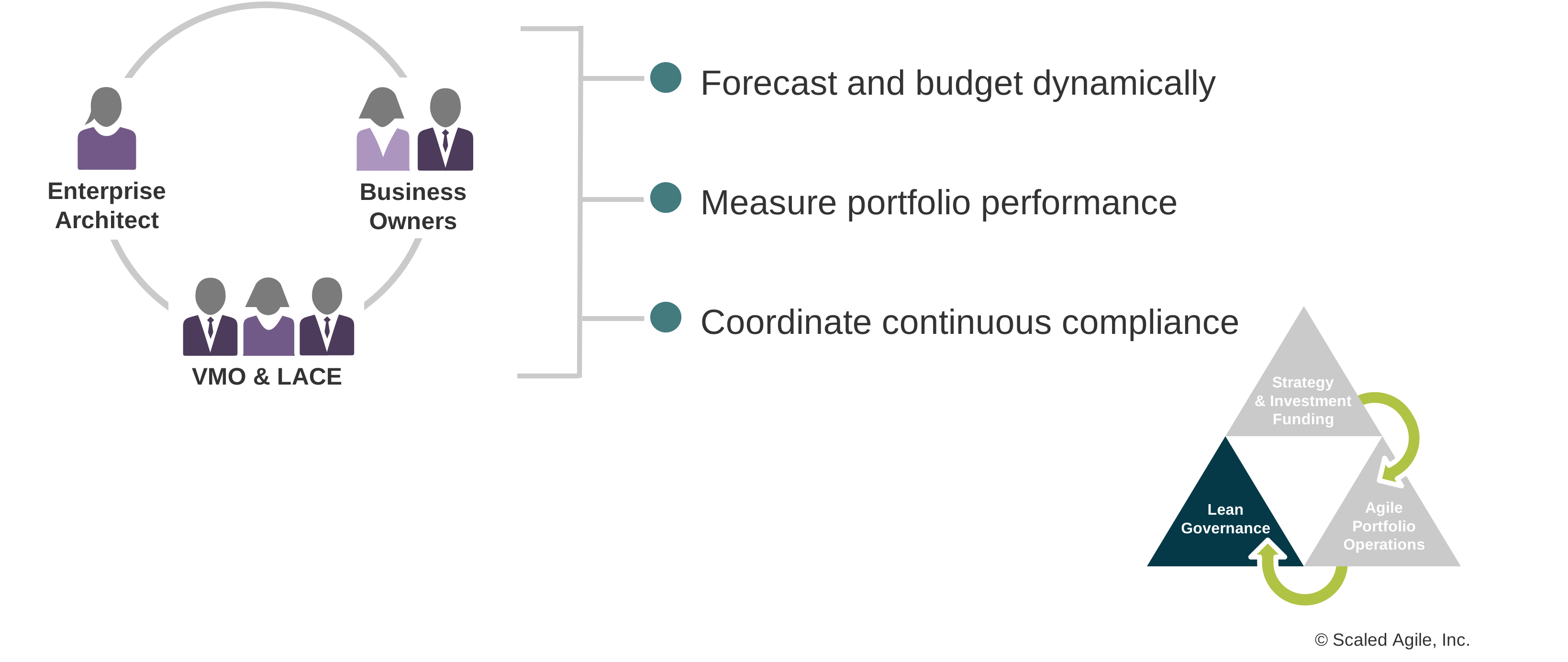
Forecast and Budget Dynamically
As described earlier, SAFe provides a Lean approach to budgeting. This lightweight, more fluid, Agile process replaces traditional planning, fixed long-range budget cycles, financial commitments, and scope. This new model includes understanding each solution’s historical and forecasted future costs and epics. LPM adjusts budgets on a cadence, typically every six months or when significant events warrant, as part of the strategic portfolio review or Participatory Budgeting events (see below).
Measure Portfolio Performance
Each portfolio establishes the minimum metrics needed to measure portfolio performance to ensure:
- Progress with strategy implementation
- Alignment of strategy and execution
- Spending aligns with the agreed boundaries
- Business outcomes are continually improving without excessive oversight of feature implementation
Measure and Grow is how portfolios evaluate their progress toward business agility and determine their next improvement steps. It consists of the following three measurement domains:
- Outcomes: How well do the portfolio’s solutions meet customers’ needs and provide the expected results for the business?
- Flow: How efficient is the portfolio at delivering a continuous flow of value to its customers and the desired outcomes for the business?
- Competency: The LPM competency self-assessment enables organizations to evaluate their proficiency against the three dimensions of Strategy & Investment Funding, Agile Portfolio Operations, and Lean Governance.
The following sections describe these three domains.
Outcomes
A portfolio primarily measures business outcomes by defining Objectives and Key Results for Strategic Themes and Value Stream Key Performance Indicators (KPIs).
- OKRs are a goal-setting framework that provides objective evidence of progress (key results) toward achieving a set of business objectives. They help anchor ambitious goals with reality. OKRs facilitate breaking status quo thinking and enable the portfolio to explore new, often unknown, territory. If the portfolio has a big dream—and inspiring strategic theme—OKRs will help measure progress toward achieving it.
- KPIs are specific and quantifiable measures of business results for the value streams within that portfolio. Outcome metrics are typically context-specific and depend heavily on the organization, business model, and the nature of solutions delivered to the customer. Some indicators, however, may be successfully applied across contexts, such as the net promoter score. The Value Stream KPIs article defines appropriate key performance indicators informed by the portfolio’s strategic themes.
Flow
As noted earlier, SAFe’s Measure and Grow guidance offers portfolios a way to assess and improve their ability to deliver innovative business solutions quickly. It includes six measures specific to flow: distribution, velocity, time, load, efficiency, and predictability. Flow time, load, and distribution are particularly relevant to the portfolio and are briefly described below.
- Flow time measures the interval needed for all the steps in the portfolio workflow to be completed. It can also be helpful to measure specific parts of this flow. For example, from the time the epic is pulled into the ‘review’ state until its hypothesis has been evaluated.
- Flow load indicates how many epics are currently in the system by process state. Keeping a healthy, limited portfolio WIP is critical to enabling the fast flow of strategic value.
- Flow distribution measures the amount of each type of work in the portfolio for a given time. A helpful view of portfolio flow distribution illustrates the trend of money allocation across investment horizons.
The Portfolio Flow article guides LPM on accelerating flow and providing continuous epics to achieve the portfolio’s vision and enterprise business objectives.
Competency
Measuring the level of organizational competency for a SAFe portfolio is accomplished with the following assessments:
- SAFe Business Agility assessment is designed for business and portfolio stakeholders to assess their overall progress in achieving true business agility.
- LPM core competency assessment helps the LPM team and its stakeholders measure their proficiency against the three domains of Strategy and Investment Funding, Agile Portfolio Operations, and Lean Governance.
Each of these assessments follows a standard process pattern of running the self-assessment, analyzing the results, taking action, and celebrating the successes. See the ‘Measuring Competency’ section of the Measure and Grow article to download these assessments.
Coordinate Continuous Compliance
Many enterprises are significantly challenged to manage their risk and compliance exposure in the face of ever-increasing challenges. The volume of regulations can be massive, the risks are significant, the data sources and tools are numerous, and the relationships between these entities are complex. It’s too much for traditional processes and infrastructure to handle effectively. Moreover, conventional compliance processes tend to defer these activities to the end, subjecting the enterprise to late discovery of issues, subsequent rework, and even compromising compliance. Therefore, a more continuous approach is recommended to coordinate ongoing compliance with relevant standards.
Moreover, as organizations adopt DevOps, the delivery rate for digital products races forward, making it extremely challenging for compliance to keep pace without getting in the way. Compliance workarounds and exceptions abound, which may result in regulatory or legal exposure and, worse, organizations being shut down or taken over by the government for non-compliance.
Automating Compliance
“Organizations need an automated way to track governance throughout the entire software delivery process so they can attest to the integrity of all assets and the security of all running applications.”
—Investments Unlimited [3]
So, how can you ensure that all aspects of your deployment pipeline are protected as delivery velocity dramatically increases? Companies that automate governance, risk, and compliance can achieve organizational goals better and faster while improving flow, reducing rework, and meeting regulations.
The DevOps Automated Governance Reference Architecture paper in [4] offers organizations guidance to help them design and implement automated governance throughout the Continuous Delivery Pipeline. This seminal whitepaper illustrates new strategies for automating significant elements of compliance and governance. The white paper inspired the book Investments Unlimited, which advances these innovative ideas and tells a story in novel form. This work and others give organizations a starting plan to automate compliance and shift compliance risk left.
The Compliance and Complying with Regulatory and Industry Standards articles provide more information on this important compliance topic.
Assuring Big Data Security
Every enterprise uses data to improve its products, optimize operations, and better understand its customers and markets. Big data concerns are addressed at the portfolio level as it requires vision, investment, and governance within and across the value streams within the portfolio. Big data governance manages the availability, usability, integrity, and security of the data in enterprise systems based on internal data standards and policies controlling data usage. Effective data governance ensures that data is consistent and trustworthy and doesn’t get misused. [5]
Lean Portfolio Management Events
The effective operation of the LPM function relies on three significant events:
- Strategic Portfolio Review
- Portfolio Sync
- Participatory Budgeting
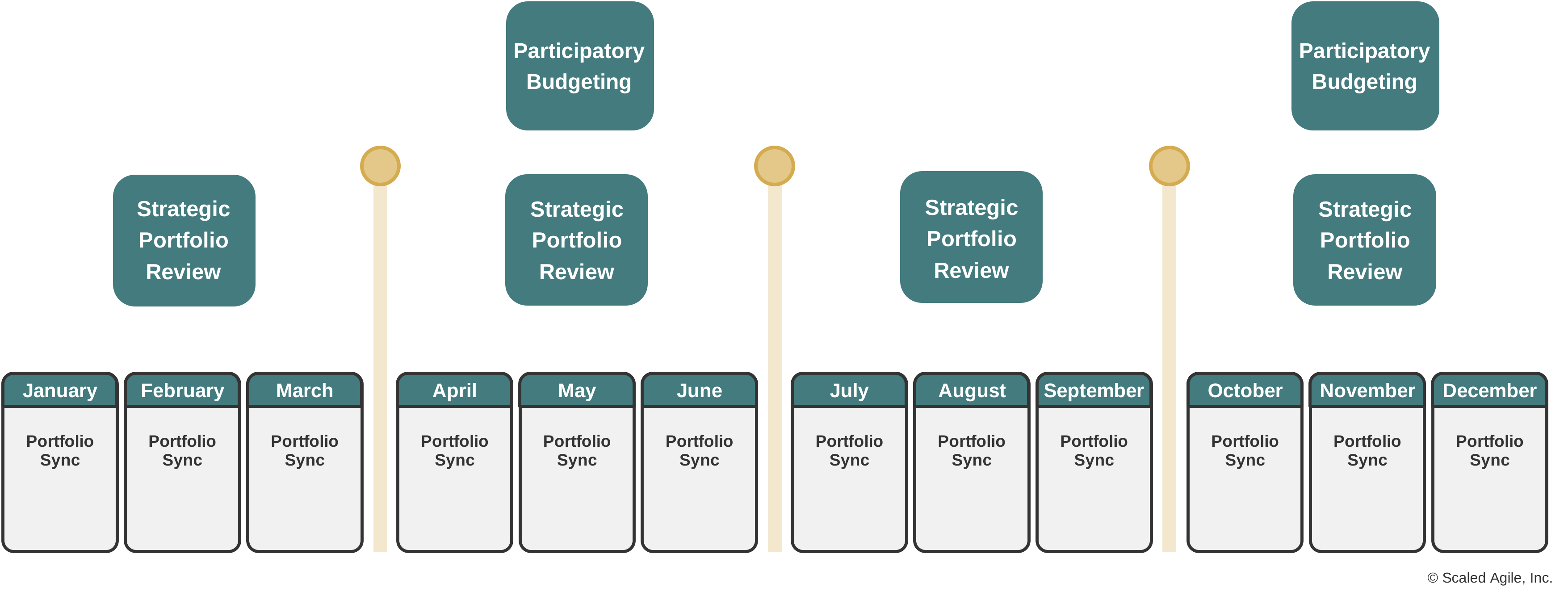
Typically, these events are held on a cadence, as illustrated in Figure 7.
Strategic Portfolio Review
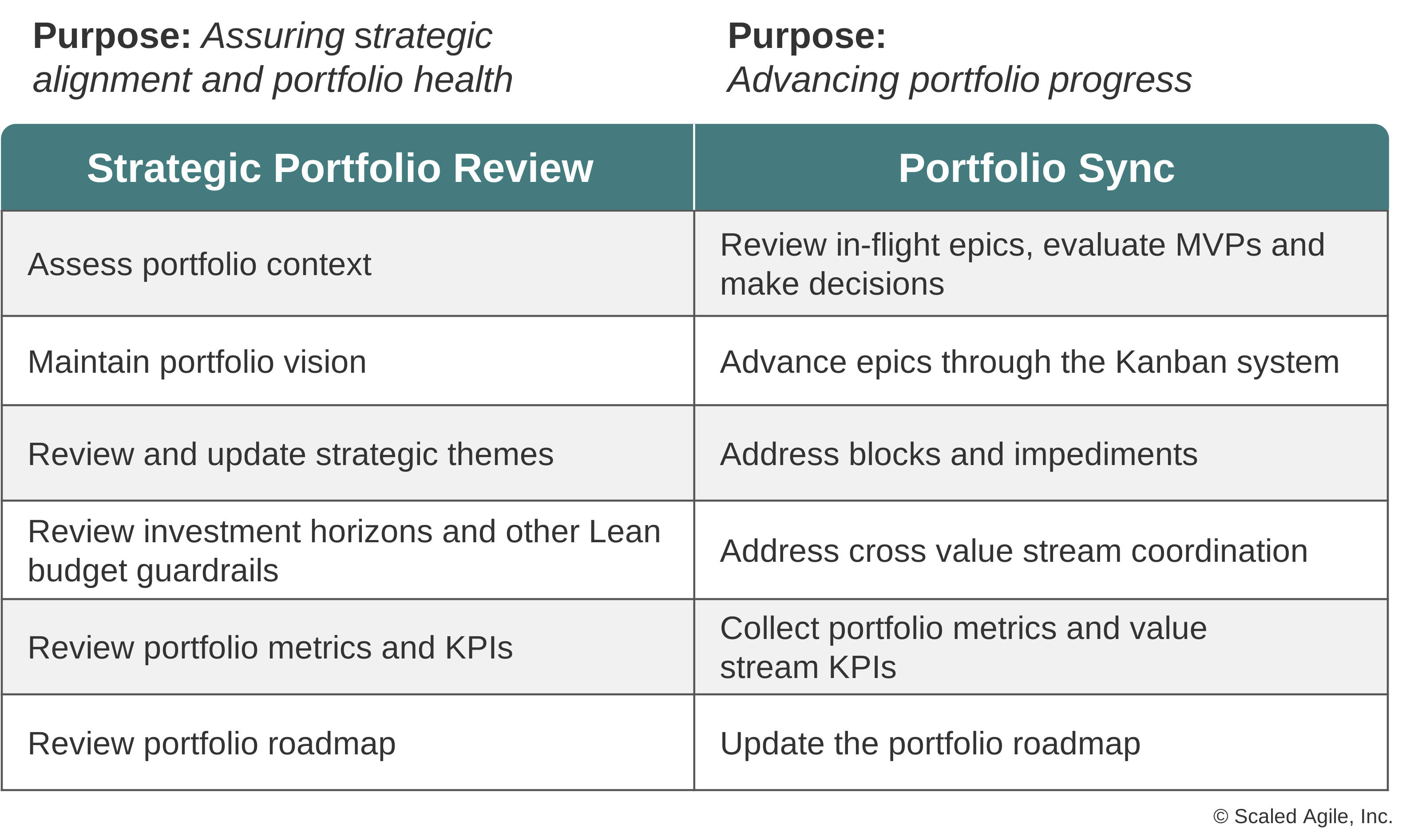
The strategic portfolio review event provides ongoing strategy, implementation, and budget alignment. This event focuses on achieving and advancing the portfolio vision. It’s typically held on a quarterly cadence, at least one month before the next PI Planning event, to enable value streams to prepare and respond to any changes,
Portfolio Sync
The portfolio sync provides visibility into how well the portfolio is progressing toward meeting its objectives. This event has a more operational focus than the strategic portfolio review. Topics typically include reviewing epic implementation, the status of KPIs, addressing dependencies, and removing impediments. The portfolio sync is generally held monthly and may be replaced with the strategic portfolio review on a given month.
Figure 8 compares the strategic portfolio review and portfolio sync events.
Participatory Budgeting
SAFe Participatory Budgeting (PB) is an LPM event in which a group of stakeholders decides how to invest the portfolio budget across solutions and epics. The resulting data is used to finalize adjustments to the value stream budgets. These budgets are typically adjusted twice annually using PB. If adjusted less frequently, spending is fixed for too long, limiting agility. Also, although more frequent budget changes may seem to support increased agility, they may create too much uncertainty and an inability to commit to any near-term course of action. (See Lean Budgets for more information).
Summary
Successfully defining and executing a strategy in a world of increasing uncertainty is challenging. It requires modernizing portfolio management, applying Lean-Agile thinking, and organizing Agile teams and ARTs around value streams that deliver a continuous flow of value to customers.
Strategy and investment funding ensures the ‘right work’ happens at the ‘right time.’ Continuous and early feedback on current initiatives, coupled with a Lean approach to funding, allows the portfolio to make the necessary adjustments to meet its business targets. Agile portfolio operations facilitate coordination across the portfolio’s value streams, maintaining alignment between strategy and execution and fostering continued operational excellence. Lean governance closes the loop by forecasting and budgeting dynamically, measuring portfolio performance, and coordinating continuous compliance. Collectively, these three dimensions work together to create superior economic outcomes.
Learn More
[1] Moore, Geoffrey A. Escape Velocity: Free Your Company’s Future from the Pull of the Past. Harper Business, 2011.
[2] Bungay, Stephen. The Art of Action: How Leaders Close the Gaps Between Plans, Actions and Results (10th Anniversary Edition). Nicholas Brealey, 2022.
[3] Beal, Helen, Bill Bensing, Jason Cox, Michael Edenzon, Topo Pal, Caleb Queern, John Rzeszotarski, Andres Vega, and John Willis. Investments Unlimited: A Novel about DevOps, Security, Audit Compliance, and Thriving in the Digital Age. IT Revolution Press, 2022.
[4] Nygard, Michael, Dr. Tapabrata “Topo” Pal, Stephen Magill, Sam Guckenheimer, and John Willis. DevOps Automated Governance Reference Architecture: Attestation of the Integrity of Assets in the Delivery Pipeline. IT Revolution Press, 2019. Retrieved October 11, 2023, from https://myresources.itrevolution.com/id006657043/DevOps-Automated-Governance-Reference-Architecture
[5] Stedman, Craig, and Jack Vaughan. What is data governance and why does it matter? TechTarget, 2022. Retrieved October 11, 2023, from https://www.techtarget.com/searchdatamanagement/definition/data-governance
Lucas, Clarissa. Beyond Agile Auditing: Three Core Components to Revolutionize Your Internal Audit Practices. IT Revolution Press, 2023.
Last update: 11 October 2023